

Private label camping equipment sourcing often begins with a color, logo, and target price. I find that this creates a serious problem: suppliers interpret the missing details differently, samples drift, and packaging changes arrive too late. I reduce this risk by translating the market, sales channel, and use scenario into verifiable product requirements.
Private label camping equipment sourcing requires buyers to define the intended user, camping scenario, sales channel, product specifications, branding, packaging, inspection criteria, and approval process before production. A suitable supplier must then coordinate these requirements across manufacturers and document how samples, quality issues, packaging changes, and final approvals are controlled.

In buyer inquiries, I regularly see the same pattern: a simple logo request becomes a broader product-development project. The following guide explains how I would structure that project so a brand can compare suppliers, control requirement changes, and build a repeatable sourcing program.
What Should Brands Define Before Private Label Camping Equipment Sourcing?
A vague request such as “I need a premium camping chair” sounds clear, but it gives a supplier little that can be executed or inspected. If I do not clarify the intended scenario first, the final product may meet the quoted specification while still being wrong for the brand’s customers.
The buyer should define the target customer, primary use scenario, climate, sales channel, retail position, target cost, and required product performance before selecting materials. I use these inputs to determine which specifications need to be fixed, which trade-offs require discussion, and which claims need qualified testing or professional review.
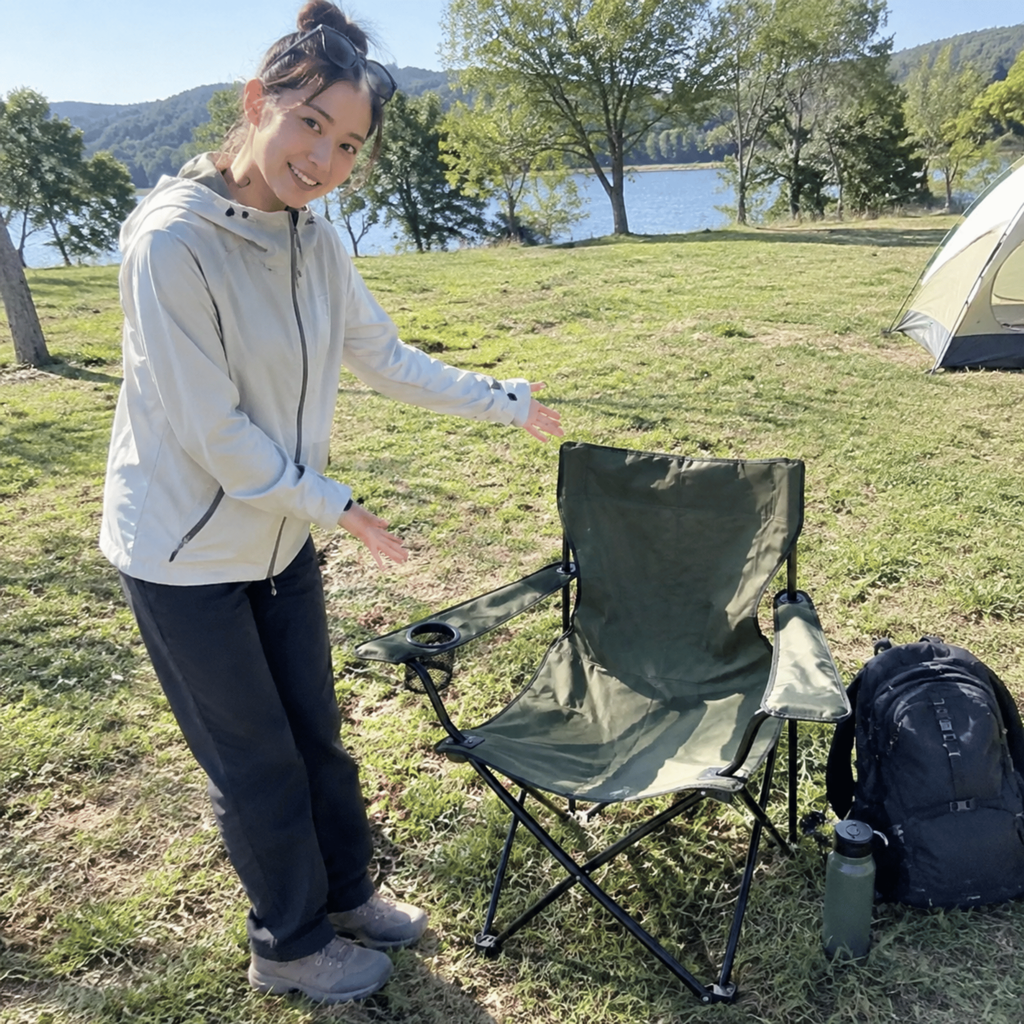
I Start With the User, Not the Material
When a buyer asks me for a “stronger fabric,” I first ask where and how the product will be used. A family carrying a folding chair from a car to a campsite has different priorities from a traveler carrying equipment over a long distance.
The intended scenario may influence:
- Product weight and folded dimensions
- Fabric construction and coating direction
- Frame design and tube dimensions
- Seat height and usable dimensions
- Expected exposure to moisture, mud, sand, or sunlight
- Cleaning and maintenance expectations
- Carry-bag construction
- Packaging format
- Target retail price
- Required warnings and instructions
A heavier fabric may appear more durable, but fabric weight alone does not determine chair durability1. I also look at load paths, stress points, stitching, edge binding, armrest attachment, tube connections, plastic components, and the relationship between the seat and frame.
Different Scenarios Create Different Trade-Offs
I would not recommend one fabric construction for every camping chair. I would first compare the product brief against its intended use.
| Use scenario | Likely priorities | Trade-offs to evaluate |
|---|---|---|
| Family or car camping | Comfort, stability, usable size, storage features | Higher weight and larger packed dimensions may be acceptable |
| Lightweight travel | Low weight, compact folding size, carrying convenience | Material and frame choices may increase cost or reduce certain comfort features |
| Humid or poolside use | Moisture management, drying behavior, cleanability | Coatings and material choices may affect feel, breathability, and cost |
| Event or promotional use | Consistent appearance, budget control, simple handling | Long-term performance may receive less emphasis than price and presentation |
| Premium outdoor retail | Finish quality, construction details, packaging, brand consistency | More development work and tighter approval criteria may be necessary |
These are not universal material rules. I treat them as questions that guide product development. The buyer must still define the required performance and ask qualified laboratories or specialists to evaluate application-specific claims.
I Convert Marketing Language Into Questions
Words such as premium, heavy-duty, lightweight, and water-resistant can mean different things to different people.2 I convert them into measurable or reviewable requirements.
For example, I might ask:
- What is the target product weight?
- What are the required open and folded dimensions?
- Which construction details distinguish the product from entry-level alternatives?
- Does the buyer need a specific load-related test?
- Which laboratory, method, and acceptance criteria will apply?
- Will the product be sold online, through a distributor, or in physical retail?
- Which appearance defects are unacceptable?
- What evidence must be approved before mass production?
This step prevents the supplier from making assumptions based only on a reference photo. It also helps a purchasing manager compare quotations on a similar basis instead of comparing products with hidden specification differences.
How Do I Build a Private Label Camping Equipment Purchase Specification?
A short purchase order may record a product name, quantity, color, and logo. However, it rarely captures the decisions made during development. When those decisions remain in emails or chat messages, I see a higher risk of old files being used, packaging details being missed, or revised requirements reaching only part of the supply chain.3
A practical purchase specification should separately define product materials, construction, dimensions, performance direction, branding, packaging, labeling, inspection criteria, approved samples, and document versions. I recommend linking every important requirement to an approval method so both buyer and supplier understand what will be checked before shipment.

I Create One Controlled Specification Record
I prefer to organize the project around a controlled specification sheet rather than a long email chain. The document can change during sampling, but each approved version should have a date or revision number.
A camping chair specification might include the following fields:
| Specification area | Details to define | Approval method |
|---|---|---|
| Product identity | Model number, product name, intended market | Buyer document review |
| Dimensions | Open size, folded size, seat height, tolerances | Measurement against approved limits |
| Frame | Material direction, tube dimensions, finish, color | Sample review and agreed inspection |
| Fabric | Construction, weight or range if relevant, coating, color | Material record, sample, or qualified test |
| Sewing | Stitching direction, reinforcement, binding, stress points | Approved sample and workmanship criteria |
| Components | Feet, connectors, armrests, cup holders, fasteners | Component comparison and functional check |
| Branding | Logo artwork, size, location, color, application method | Artwork proof and pre-production sample |
| Carry bag | Material, closure, handle, label, logo | Sample approval |
| Performance | Applicable functions and required test direction | Agreed test method and acceptance criteria |
| Packaging | Retail pack, inner pack, carton, protection | Packaging specification and pack-out sample |
| Inspection | Defect categories, sample plan, critical checks | Written inspection standard |
I do not treat every field as equally important for every product. A folding wagon, sleeping mat, waterproof bag, picnic blanket, and insulated bag each have different failure modes. The specification should reflect the product rather than copy an unrelated template.
The Branding Method Needs Its Own Review
A logo file does not fully define branding. I also need to know:
- The final artwork format
- Logo dimensions and location
- Color references
- Printing, embroidery, patch, label, or other application method
- Whether the artwork sits on a seam or curved surface
- The required appearance after folding
- Any restrictions on visible backing or stitch color
- The process for approving a physical branded sample
I once received an inquiry in which the buyer initially asked only for logo printing. After I asked about the sales channel and retail positioning, the discussion expanded to the carry bag, woven label, carton marks, barcode location, and product instructions. That experience reflects a common sourcing issue: the logo is often only the visible part of a much larger private-label requirement.
I Define Change Control Before Changes Occur
Requirement drift becomes expensive when a brand changes its positioning during sampling.4 A product that moves from a distributor program to premium retail may suddenly need different packaging, finish details, instructions, or branding.
I recommend a simple change process:
- The buyer submits the requested revision in writing.
- The supplier identifies affected components, costs, samples, tooling, and timing.
- Both sides update the specification revision.
- The supplier confirms which old materials or artwork must no longer be used.
- The buyer approves a revised sample, proof, or document.
- Both sides record the final production version.
The buyer should also distinguish between a reference sample and an approved production standard. A market sample can communicate style, but it may contain materials, dimensions, or construction details that neither side intends to reproduce exactly.
Why Is Packaging Part of Private Label Camping Equipment Development?
Packaging is often discussed after the product sample has been approved. I consider that sequence risky. If a retailer, marketplace, importer, or distributor has specific labeling and pack-out requirements, late packaging changes can alter unit cost, carton dimensions, artwork schedules, and even the product’s channel readiness5.
Private label camping equipment packaging should be developed alongside the product because it affects presentation, protection, labeling, carton configuration, and logistics. Buyers should confirm destination- and channel-specific requirements before sampling, then record packaging materials, artwork, warnings, barcodes, quantities, carton marks, and approval evidence separately in the purchase order.
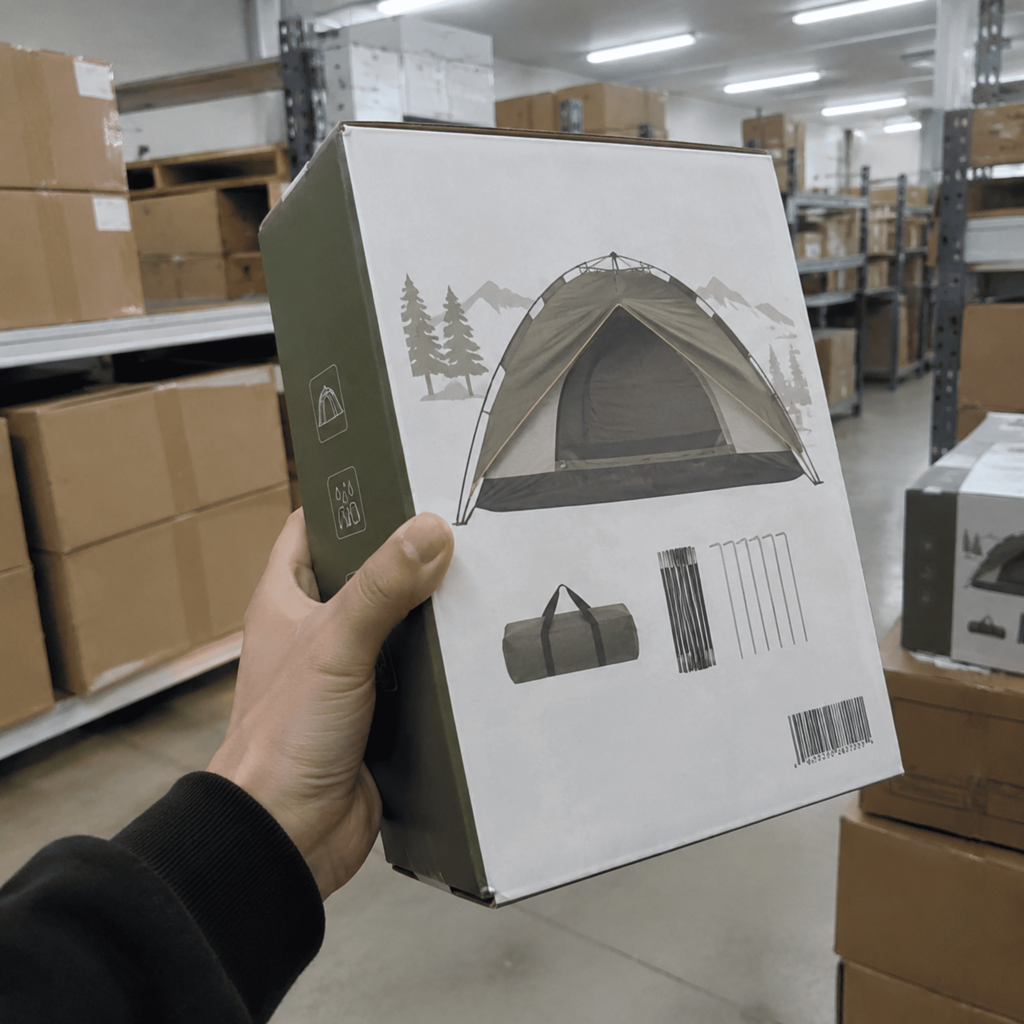
I Separate Product Packaging From Shipping Packaging
I find it useful to divide packaging into three levels.
Primary or retail packaging presents or contains the individual product.6 Depending on the item and channel, it might include a color box, sleeve, hangtag, belly band, polybag, insert, or display-ready format.
Inner packaging groups or protects a smaller number of units inside the master carton. It may prevent abrasion, separate colors, or support a retailer’s handling process.
Master-carton packaging protects goods during storage and transport.7 It includes carton construction, unit quantity, gross and net weight, dimensions, shipping marks, and internal protection.
A packaging specification should not state only “export carton.” I would document the agreed format and ask how it will be verified.
Channel Requirements Must Come From the Channel
Retailers and markets do not follow one universal packaging rule.8 Requirements can change by product, destination, distribution method, and retailer program. Therefore, I ask buyers to supply current channel manuals or written instructions when they are available.
The buyer may need to confirm:
- Barcode type, source, placement, and readability
- Country-of-origin marking
- Product identity and model information
- Importer or responsible-party details where applicable
- Language requirements
- Safety information and warnings
- Material or disposal marks
- Carton labels and routing information
- E-commerce or retail pack-out rules
- Applicable transport-testing expectations
- Restricted packaging materials
- Documentation needed for channel approval
I do not assume that a warning, test method, label, or packaging material is mandatory everywhere. The importer and buyer should verify current legal and channel requirements with qualified professionals.
I Add Packaging to the Approval Workflow
A useful approval sequence can include:
- Dieline approval: The buyer confirms structure and artwork boundaries.
- Artwork proof: Both sides review text, logos, colors, warnings, and barcode position.
- Physical packaging sample: The buyer checks material, dimensions, print, and assembly.
- Pack-out sample: The supplier demonstrates how the product fits and is protected.
- Carton configuration review: Both sides confirm quantity, dimensions, weight, and marks.
- Required test evidence: The buyer reviews any agreed reports or test records.
- Golden sample or approved reference: Both sides identify the final packaging version.
I also keep packaging requirements separate from product construction requirements in the purchase order. This separation makes omissions easier to detect. It also helps when the same product is sold through multiple channels with different packaging.
I treat packaging as a product-development workstream, not as decoration added before shipment.
How Should Buyers Evaluate Private Label Camping Equipment Suppliers?
The phrase “direct factory” often receives too much attention in supplier screening. Camping product programs may include chairs, tables, cots, mats, wagons, bags, and picnic products, which can involve different production capabilities. I believe buyers gain more useful information by examining how a supplier coordinates those categories.
A buyer should evaluate whether a private label camping equipment supplier transparently explains its manufacturing, trading, development, and quality-control roles. The buyer should also review how requirements reach production partners, how category-specific defects are defined, how inspections are recorded, and how corrective actions and final approvals are managed.

I Ask Who Does What
Ridgimax operates as an integrated industrial and trading B2B business in Shanghai. We coordinate product development and sourcing across outdoor, pet, and tool categories. We should not imply that we own a factory for every product category.
For a buyer, transparent responsibility is more useful than an unsupported factory label. I recommend asking:
- Who develops the specification?
- Who selects and manages the production partner?
- Who approves materials and components?
- Who checks samples?
- Who controls artwork and packaging versions?
- Who performs in-process and final inspection?
- Who communicates nonconformities?
- Who approves corrective actions?
- Who releases the order for shipment?
- Who retains the inspection and approval records?
The supplier’s answers should match the complexity of the program. A simple stock item with a printed logo may need a lighter process than a newly developed folding chair with custom components and channel-specific packaging.
Quality Standards Should Reflect the Product
A generic inspection checklist cannot fully cover several camping categories.9 Each product has its own likely defect points.
| Product category | Examples of checks I would discuss |
|---|---|
| Folding chairs and tables | Stability, folding action, joints, fasteners, frame finish, fabric attachment |
| Camping cots | Frame assembly, fabric tension, connection points, usable dimensions |
| Sleeping mats | Valve function, inflation behavior, sealing, surface appearance |
| Folding wagons | Wheel movement, handle operation, frame folding, fabric fit, fasteners |
| Insulated bags | Zipper operation, lining condition, seams, handles, dimensional consistency |
| Waterproof or dry bags | Closure construction, seam direction, accessories, agreed water-related evaluation |
| Picnic blankets | Layer alignment, edge finish, folding method, strap or handle attachment |
These checks are examples, not complete standards. I would work with the buyer to define critical, major, and minor defects for the specific design. If the buyer uses a sampling plan, both sides should document the selected standard, inspection level, acceptance criteria, and lot definition rather than assume that one familiar number applies to every order.10
I Look for Evidence of Coordination
A supplier’s presentation may describe quality control, but procurement teams need evidence that the process can be followed. I suggest requesting anonymized examples or blank templates where confidentiality permits.
Useful records may include:
- Product specification templates
- Sample approval forms
- Artwork approval records
- Packaging specifications
- Incoming-material check forms
- In-process inspection records
- Final inspection reports
- Nonconformity reports
- Corrective-action records
- Photo records
- Version-control logs
- Shipment-release approvals
Certifications and test reports also require careful review. I recommend checking the issuing organization, holder, product scope, model coverage, test method, dates, and current validity. A report for a similar product does not automatically prove that a new private-label model meets the same requirement.11
I Compare Suppliers Through a Pilot Project
For a broad range, I would not begin by placing every category with one supplier. I would start with a controlled pilot order or development project.
The pilot can reveal:
- How quickly the supplier converts a brief into questions
- Whether the quotation clearly states assumptions
- How accurately sample revisions are recorded
- Whether packaging development runs in parallel
- How the team handles a discovered defect
- Whether production information matches the approved sample
- How clearly the supplier reports delays or trade-offs
- Whether documents remain organized for repeat orders
This approach evaluates the coordination system under real conditions. It also gives the buyer a stronger basis for deciding whether to expand into additional private label camping equipment categories.
Frequently Asked Questions
What information should I send for a private label camping equipment quotation?
I recommend sending the target market, sales channel, expected quantity, product type, dimensions, intended use, target positioning, reference images, material direction, branding needs, packaging requirements, and desired schedule. I also ask buyers to identify which details are fixed and which remain open to supplier recommendations.
Can I start private label production with only a logo and reference photo?
You can begin an inquiry with those materials, but I would not use them as the final production specification. A photo does not reliably define dimensions, materials, construction, performance, packaging, or acceptable defects.12 I recommend developing and approving a written specification and physical sample before mass production.
Is a heavier camping-chair fabric always better?
No. I consider fabric weight only one factor. The intended use, fabric construction, coating, stitching, edge treatment, frame design, attachment points, target product weight, and cost all affect the final choice. Buyers should define required performance and use qualified testing when a specific claim needs verification.
Should I choose a direct factory or a sourcing and trading company?
I would choose based on capability and transparency rather than the label alone. A specialized factory may suit a narrow product line. An industrial-trading supplier may offer stronger multi-category coordination. In both cases, verify who controls development, manufacturing communication, inspections, corrective actions, packaging, and final approval.
How should I approve a private label camping product before production?
I recommend approving the written specification, product sample, branding method, color direction, artwork, packaging structure, pack-out, carton configuration, and inspection criteria. Both sides should record revision numbers and retain an identified approval sample. Application-specific safety and compliance decisions should receive qualified professional review.
Conclusion: Building a More Reliable Private Label Camping Equipment Program
Successful private label camping equipment sourcing starts with the customer scenario and sales channel, not the logo. I recommend converting the brand position into controlled product, branding, packaging, inspection, and approval specifications. Buyers should then evaluate how a supplier coordinates those requirements across relevant production partners instead of relying on an unsupported “direct factory” claim.
Ridgimax supports B2B buyers with camping product sourcing, OEM/ODM development, customization, packaging coordination, and multi-category supply-chain management. Contact us with your product brief, target market, quantity, and channel requirements to begin a structured sourcing review.
"Effect of Different Sewing Parameters on Lockstitch Seam ...", https://www.academia.edu/67471432/Effect_of_Different_Sewing_Parameters_on_Lockstitch_Seam_Strength_for_Denim_Fabric. Textile testing literature evaluates fabric breaking strength and sewn-seam failure separately, indicating that material weight alone cannot establish the durability of an assembled chair; these tests do not, however, predict complete chair performance without product-level structural evaluation. Evidence role: mechanism; source type: paper. Supports: The source should show that fabric strength, seam performance, and assembled-product construction are separate variables affecting failure and durability.. Scope note: Textile tests provide contextual support but do not directly establish the durability of a particular camping-chair design. ↩
"Appendix C: How to Write a Good Requirement", https://www.nasa.gov/reference/appendix-c-how-to-write-a-good-requirement/. NASA requirements-engineering guidance states that requirements should be clear, unambiguous, and verifiable, supporting the conversion of subjective descriptors into measurable criteria; although developed for systems engineering, the principle is applicable to product specifications. Evidence role: expert_consensus; source type: government. Supports: Authoritative requirements-engineering guidance should state that requirements should be unambiguous, measurable, and verifiable rather than expressed through subjective adjectives.. Scope note: The guidance is not specific to camping equipment or consumer-product marketing terms. ↩
"6.5 Configuration Management", https://www.nasa.gov/reference/6-5-configuration-management/. ISO configuration-management guidance identifies controlled baselines, change control, and configuration-status accounting as mechanisms for maintaining consistent product information; it supports the stated risk mechanism but does not quantify the failure rate associated specifically with email or chat. Evidence role: mechanism; source type: institution. Supports: The source should explain how configuration identification, change control, and status accounting reduce the use of obsolete or inconsistently distributed requirements.. Scope note: The source supports the configuration-control mechanism rather than directly measuring errors caused by particular communication tools. ↩
"Error Cost Escalation Through the Project Life Cycle", https://ntrs.nasa.gov/api/citations/20100036670/downloads/20100036670.pdf. Engineering-change research finds that requirement revisions can propagate through components, documentation, tooling, and production planning, with later changes generally creating more rework; the magnitude of the effect depends on the product and development stage. Evidence role: general_support; source type: paper. Supports: Research should show that engineering changes can propagate across product components and processes and that later changes commonly impose greater rework, cost, or schedule consequences.. Scope note: General product-development findings do not establish the cost of any specific private-label camping project. ↩
"Efficient Packaging Design in Logistics (PDF)", https://www.academia.edu/53673987/Efficient_Packaging_Design_in_Logistics. Packaging-logistics research treats package design as a determinant of material use, handling, storage, and transport efficiency, supporting the conclusion that packaging revisions can affect cost and logistics; channel readiness remains dependent on the rules of the particular retailer or market. Evidence role: mechanism; source type: paper. Supports: The source should connect packaging design decisions with material cost, handling, storage, transport efficiency, and supply-chain processes.. Scope note: The evidence supports general operational effects but cannot show that every packaging revision will delay a specific sales channel. ↩
"Packaging and packaging waste (from 2026) | EUR-Lex", https://eur-lex.europa.eu/EN/legal-content/summary/packaging-and-packaging-waste-from-2026.html. European Union packaging law defines sales packaging as packaging conceived to constitute a sales unit for the final user or consumer at the point of purchase, corresponding to the article’s use of primary or retail packaging. Evidence role: definition; source type: government. Supports: An official source should define sales or primary packaging as packaging conceived to constitute a sales unit for the final user or consumer.. ↩
"Report Name: European Union Finalizes New Rules for Packaging ...", https://apps.fas.usda.gov/newgainapi/api/Report/DownloadReportByFileName?fileName=European%20Union%20Finalizes%20New%20Rules%20for%20Packaging%20and%20Packaging%20Waste%20Reduction_Brussels%20USEU_European%20Union_E42024-0012. European Union packaging law defines transport packaging as packaging designed to facilitate handling and transport and to prevent damage from physical handling and transport, directly supporting the stated function of master cartons. Evidence role: definition; source type: government. Supports: The source should define transport packaging in terms of facilitating handling and transport and preventing damage.. ↩
"EU - Labeling/Marking Requirements", https://www.trade.gov/country-commercial-guides/eu-labelingmarking-requirements. Government market-access guidance documents jurisdiction- and product-specific packaging and labeling obligations, supporting the absence of a single universal rule; such guidance does not establish the separate contractual requirements imposed by every retailer. Evidence role: general_support; source type: government. Supports: Government trade or market-access guidance should explain that packaging and labeling obligations depend on the destination, product category, and applicable regulatory regime.. Scope note: Government sources directly address legal variation but may not cover private retailer manuals or marketplace-specific pack-out rules. ↩
"ISO 9001 and 9002 Requirements by Section", https://faculty-web.msoe.edu/tritt/be4xx/iso9000sum.html. Quality-management standards require organizations to verify product conformity against specified requirements and acceptance criteria, supporting product-specific inspection planning; they do not prescribe the exact defect checks needed for each camping-equipment category. Evidence role: expert_consensus; source type: institution. Supports: Quality-management guidance should establish that monitoring, inspection, and acceptance activities must be tied to defined product requirements and relevant quality characteristics.. Scope note: The source supports the general quality-management principle, not the article’s particular category-by-category checklist. ↩
"6.2. Test Product for Acceptability: Lot Acceptance Sampling", https://www.itl.nist.gov/div898/handbook/pmc/section2/pmc2.htm. ISO 2859-1 acceptance-sampling procedures select sample sizes and acceptance numbers by reference to lot size, inspection level, and specified acceptance-quality parameters, confirming that a single familiar number does not define a complete inspection plan. Evidence role: mechanism; source type: institution. Supports: The source should explain that a sampling plan is selected using defined lot, inspection-level, and acceptance parameters rather than a standalone AQL value.. ↩
"General Use Products: Certification and Testing", https://www.cpsc.gov/Business--Manufacturing/Testing-Certification/General-Use-Products-Certification-and-Testing. ISO/IEC 17025 requires laboratory reports to identify the tested item, method, and results clearly, supporting the conclusion that evidence for one sample or model cannot automatically establish conformity of a different private-label model. Evidence role: general_support; source type: institution. Supports: Accreditation guidance should require test reports to identify the tested item, method, and results, thereby limiting conclusions to the examined sample and stated scope.. Scope note: A qualified conformity-assessment body may permit model families or technical equivalence under defined rules, so transferability must be assessed case by case. ↩
"A Dimension and Tolerance Data Model", https://tsapps.nist.gov/publication/get_pdf.cfm?pub_id=821122. Engineering-drawing guidance treats dimensions, tolerances, materials, and manufacturing notes as explicit elements of technical product definition, supporting the need to supplement a reference photograph with a written specification; it does not directly evaluate private-label sourcing photographs. Evidence role: general_support; source type: education. Supports: Engineering-design guidance should explain that technical drawings and specifications communicate dimensions, tolerances, materials, and other manufacturing requirements that images alone do not define.. Scope note: The support is based on general engineering-documentation practice rather than a study of camping-equipment purchase orders. ↩



Leave a Reply