
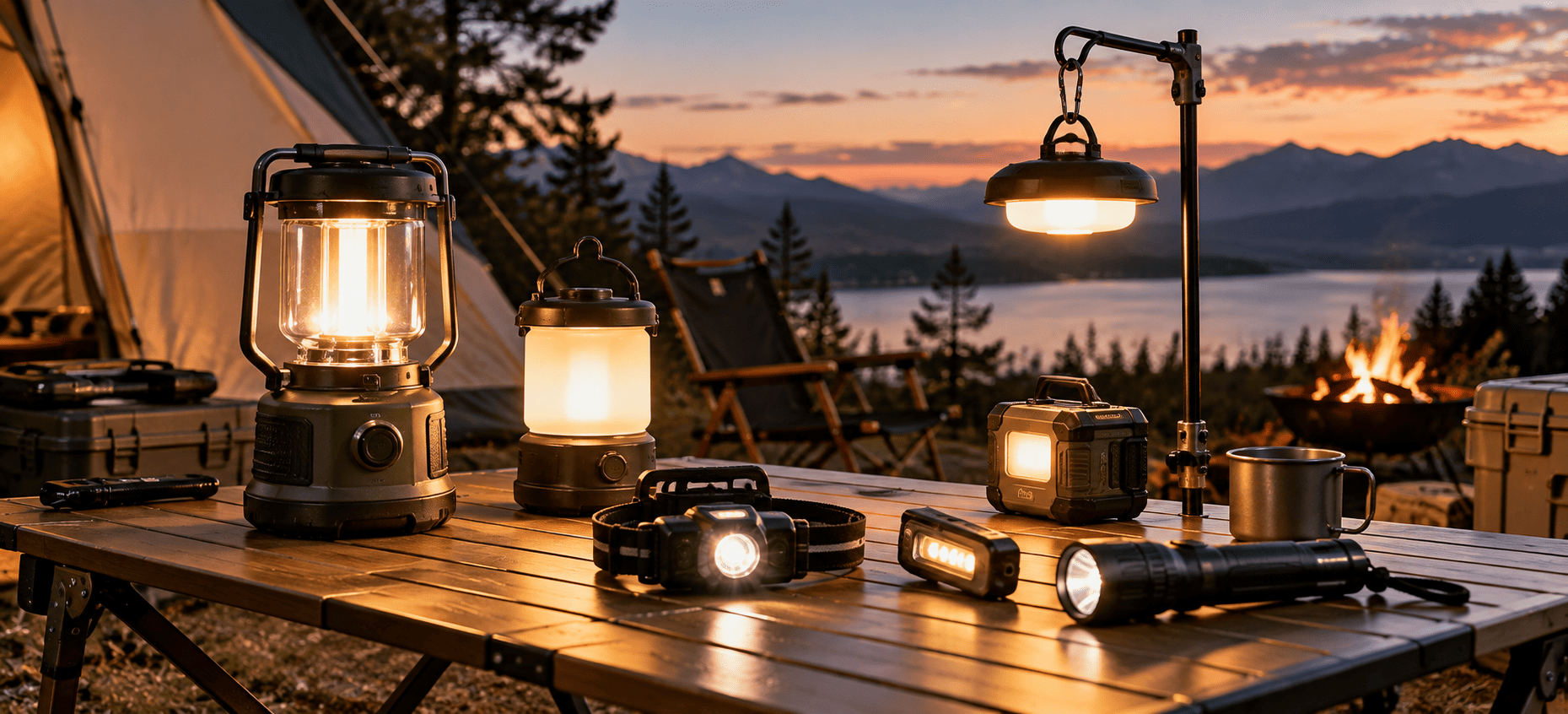
Camping lanterns and lighting accessories can create costly procurement problems when buyers rely on headline lumens, vague runtime claims, or unverified packaging icons. Those claims often hide different operating modes and test conditions.1 I reduce that risk by matching each SKU to a task, requesting traceable evidence, and translating performance needs into purchase-order criteria.
I source camping lanterns and lighting accessories by defining the lighting task first, comparing relevant ANSI/PLATO FL 1 performance metrics under equivalent conditions, and verifying each claim against supporting reports. I then document modes, batteries, accessories, test conditions, packaging claims, and acceptance records in the purchase order before approving production.
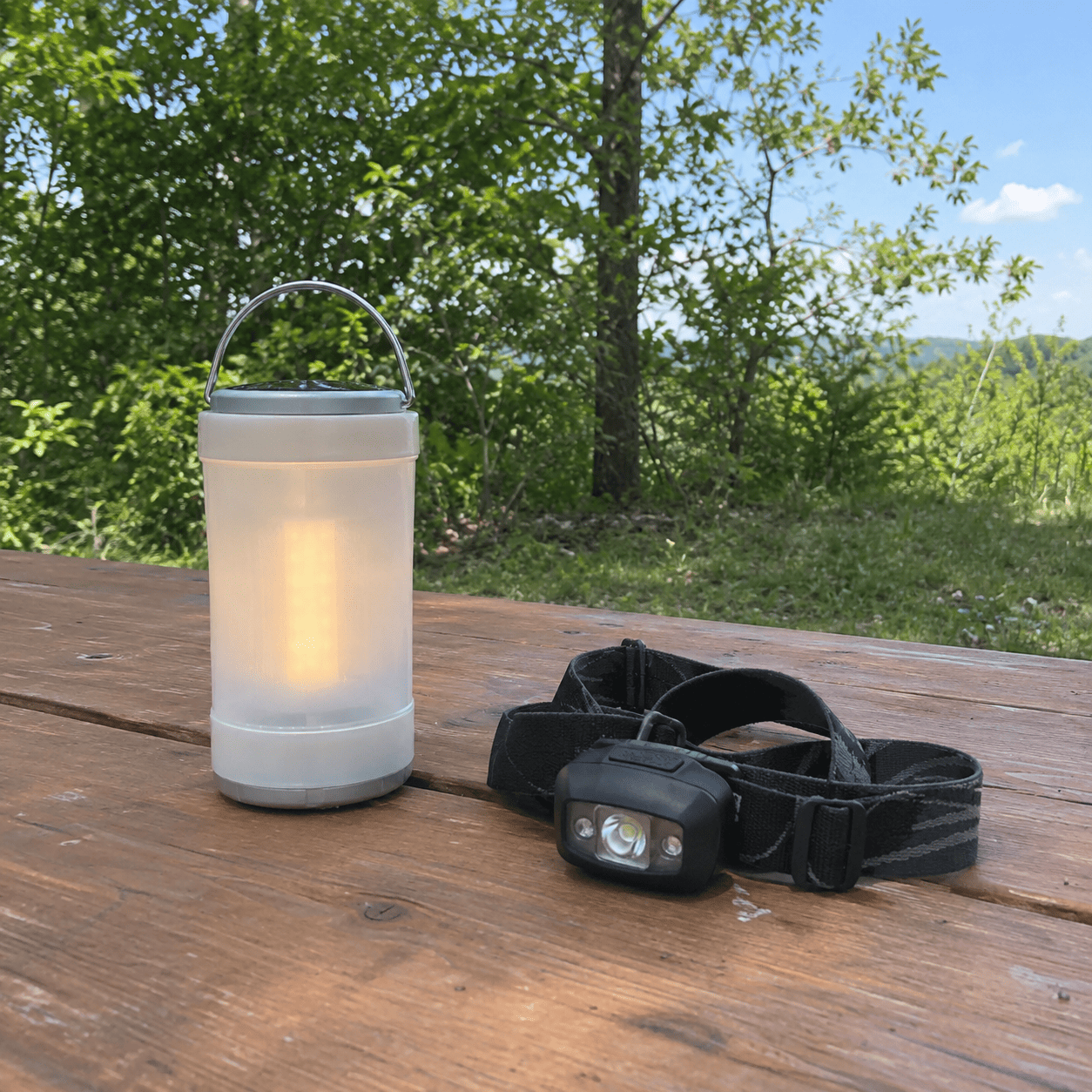
A structured process does not mean choosing the lantern with the largest number on its packaging. I look beyond headline specifications to understand whether a product can perform its intended task consistently. That shift reveals which claims are comparable, which documents are missing, and which details belong in the final order.
How Should I Match Camping Lanterns and Lighting Accessories to Their Tasks?
A poorly defined lighting task makes every later comparison unreliable. A high-output lantern may still be unsuitable for table lighting, tent illumination, route finding, or emergency use. I start by defining where, how, and for how long the light must operate before I discuss product specifications with a factory.
I match each SKU to a specific task and then select the metrics that describe success in that task. I may prioritize distributed light and useful runtime for an area lantern, while I may emphasize beam distance, peak beam intensity, weight, and operating controls for a headlamp used during movement.
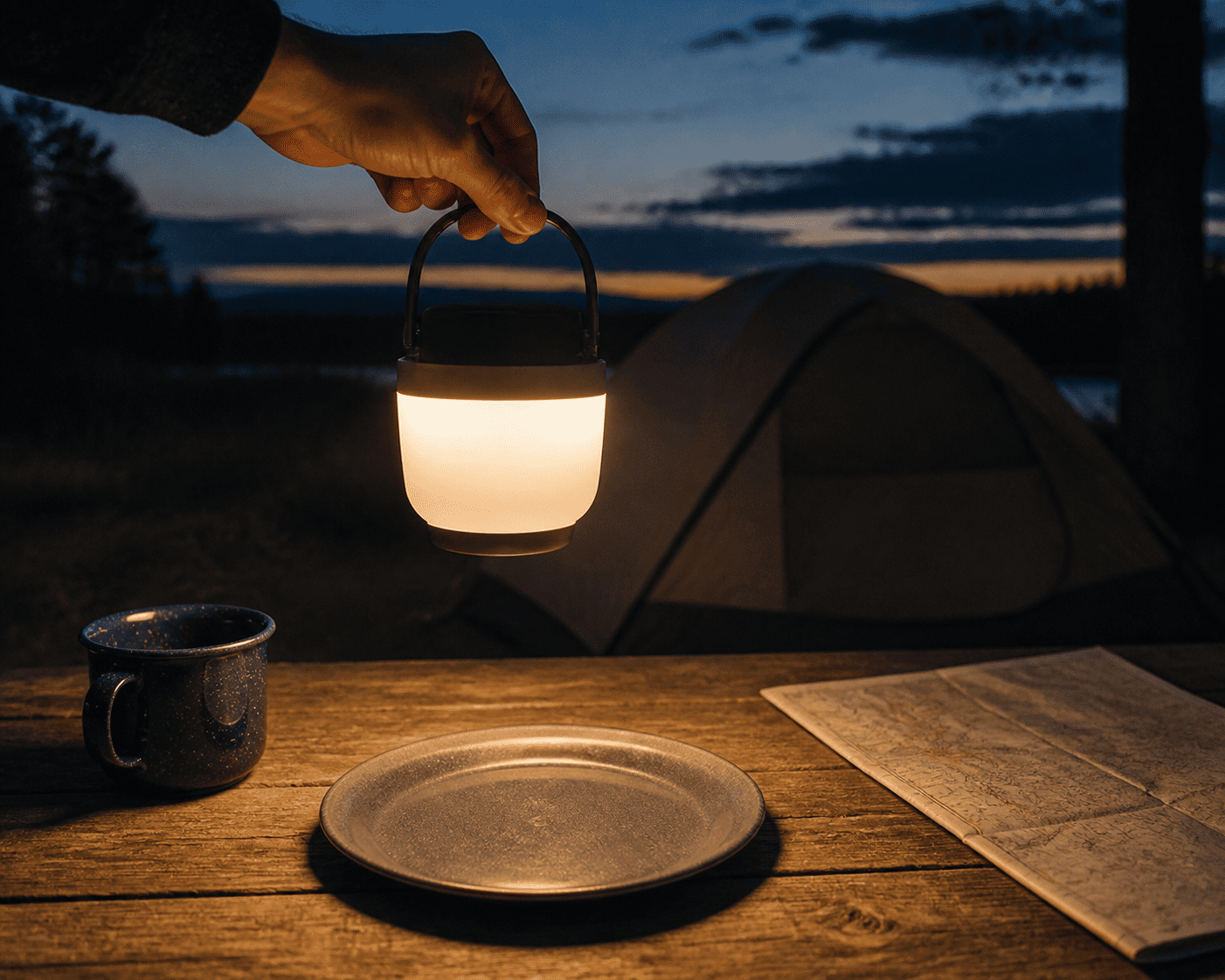
I Start with the Use Case, Not the Product Page
In my product-development work, I often receive inquiries that begin with a simple request such as “a bright camping lantern.” I cannot convert that phrase into a dependable specification. I first ask what the buyer expects the light to do.
Typical lighting tasks include:
- I may specify wide-area illumination for a campsite, dining table, or shelter.
- I may specify close-range personal lighting for reading, cooking, or equipment checks.
- I may specify directional lighting for walking, route finding, or maintenance work.
- I may specify low-level ambient light when glare control and battery conservation matter.
- I may specify emergency visibility or signaling when a distinct mode forms part of the product concept.
- I may specify hands-free lighting when a headlamp is more suitable than a hanging lantern.
A single SKU can support several tasks, but I do not assume that one high number proves broad suitability.
I Connect Each Task to Relevant Metrics
ANSI/PLATO FL 1 provides standardized ways to describe selected flashlight performance characteristics.2 However, I always check the applicable edition, its scope, the exact procedures, and the supporting documents before using a value as an acceptance requirement. I also avoid presenting FL 1 as a general product certification.
| Lighting task | Metrics or features I review | Common sourcing mistake |
|---|---|---|
| Campsite area lighting | Total light output, light distribution, runtime by mode, controls | I avoid selecting by maximum lumens alone. |
| Table or tent lighting | Low-mode output, glare, diffuser design, runtime, hanging method | I avoid overlooking minimum usable brightness. |
| Walking or route finding | Beam distance, peak beam intensity, runtime, weight, beam pattern | I avoid treating lumens as a substitute for beam reach. |
| Maintenance or equipment checks | Beam control, color rendering if relevant, mounting, controls | I avoid accepting subjective claims without criteria. |
| Wet outdoor use | Documented water-resistance claim and applicable test evidence | I avoid relying only on an icon or sales statement. |
| Rugged transport | Documented impact-resistance claim and defined test evidence | I avoid assuming a rubber housing proves resistance. |
Lumens describe total light output, not every aspect of usability.3 Beam distance and peak beam intensity address different characteristics.4 Runtime adds another dimension, while impact and water resistance address environmental durability. I evaluate these metrics together rather than treating one value as a universal quality score.
I also review non-FL 1 characteristics that affect commercial suitability. These details can include control logic, accidental activation protection, charging interfaces, battery replacement, hanging hooks, tripod threads, magnetic mounts, diffusers, storage cases, and spare-part availability. I define separate inspection methods when FL 1 does not cover a required feature.
I treat each performance number as an answer to a specific question. I do not treat it as proof that the complete product is suitable for every camping task.
Which Performance Claims Matter for Camping Lanterns and Lighting Accessories?
Lighting specifications become misleading when competing suppliers use different modes, batteries, environments, or methods. Packaging may make two products appear directly comparable even when their evidence does not. I therefore normalize the basis of comparison before I shortlist a model or request a quotation.
I compare total light output, beam distance, peak beam intensity, runtime, impact resistance, and water resistance only when those metrics apply to the intended task. I require every FL 1 claim or icon to map to evidence that identifies the tested product, operating mode, battery configuration, environment, and method.
I Separate Lumens from Beam Performance
A lantern and a headlamp can share a lumen value while delivering very different lighting experiences.5 A diffuser may spread light across a campsite, while an optical system may concentrate light in a narrower direction. I therefore do not use total output to predict beam distance or intensity.
I normally review these questions:
- What does the light need to illuminate? I distinguish a broad nearby area from a distant target.
- Which operating mode produced the claim? I record whether the value applies to maximum, medium, low, boost, or another named mode.
- Which battery powered the sample? I record the battery type, model, capacity statement, quantity, and configuration when relevant.
- Which report supports the value? I ask for traceable documentation rather than a screenshot of a package or product page.
- Does the claim apply to the production configuration? I check whether LEDs, optics, drivers, batteries, and firmware match the tested sample.
FL 1 includes standardized definitions and procedures for selected performance metrics. For example, the standard addresses runtime relative to initial output and beam distance using a defined illuminance basis.6 However, I do not reproduce exact thresholds or procedural sequences from memory. I verify them against the current applicable edition and the actual test documentation.
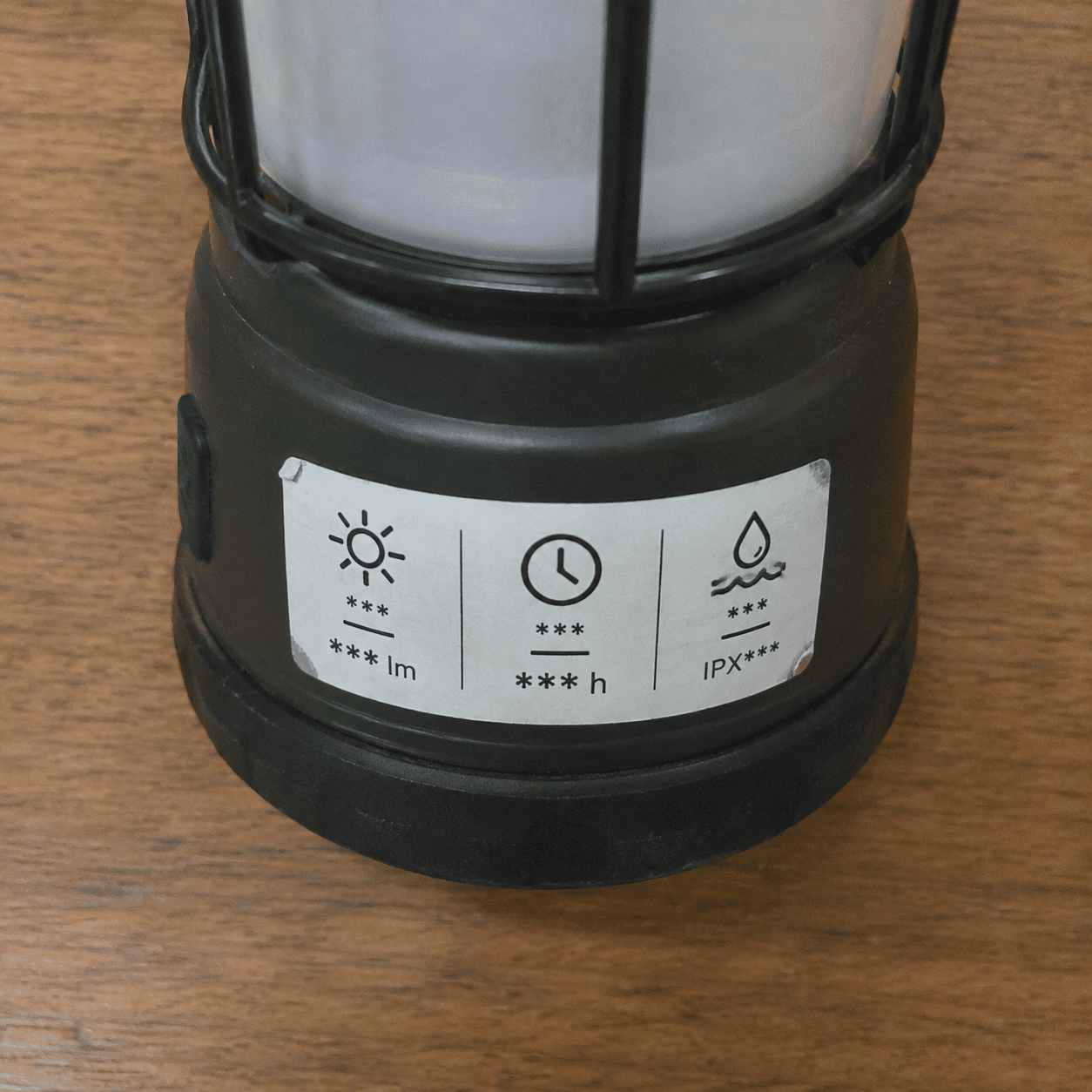
I Treat Packaging Icons as Navigation, Not Evidence
FL 1-style icons can help buyers scan and compare products. However, an icon does not independently prove that a laboratory followed the applicable method or that the report corresponds to the offered SKU.7
I ask the supplier to connect each packaging claim to a supporting record:
| Packaging claim | Evidence I request | Verification question I ask |
|---|---|---|
| Light output | Report with product and mode identification | Does the tested configuration match the order? |
| Runtime | Report showing mode, battery, and stated conditions | Does the package clearly identify the relevant setting? |
| Beam distance | Report using the applicable standardized method | Does the offered optical system match the sample? |
| Peak beam intensity | Traceable result for the stated mode | Is the claim separate from total lumens? |
| Water resistance | Report identifying the claim and procedure | Does the test apply to the complete assembled product? |
| Impact resistance | Report identifying the method and sample | Do the construction and materials match production? |
I prefer a report from a competent, qualified testing provider when the claim creates significant commercial or application risk. I also ask a qualified professional to evaluate application-specific requirements. My sourcing experience helps me identify missing information, but I do not present myself as an optical laboratory or certification authority.
How Should I Compare Runtime for Camping Lanterns and Lighting Accessories?
Runtime claims often look precise while remaining commercially ambiguous. A package may show a long duration without clearly stating the brightness mode, battery, or test environment. That ambiguity can lead to failed incoming inspections, customer complaints, and disputes about whether delivered goods meet the order.
I compare runtime only at an identified output mode and with documented battery conditions. The specification should state the mode, battery model or approved configuration, test basis, relevant environment, and supporting report. I do not convert an unsupported “up to” claim into a purchase-order acceptance criterion.
I Compare Like with Like
A maximum-mode runtime cannot be compared fairly with a low-mode runtime.8 A rechargeable lantern with a specified battery pack cannot be compared directly with a product tested using a different cell chemistry or capacity. Environmental conditions, control algorithms, and output regulation can also affect the result.9
I use a normalization checklist before I compare quotations:
- I confirm that both products use the same named operating mode or an equivalent measured output condition.
- I identify the battery type, battery model, stated capacity, quantity, and configuration.
- I check whether the battery is supplied, built in, optional, or sourced separately.
- I request the test environment and method stated in the supporting documentation.
- I review whether the light maintains output, steps down, or uses a timed boost mode.
- I confirm whether the claimed runtime appears on packaging, instructions, online listings, and sales sheets consistently.
- I check whether the tested sample represents the components planned for mass production.
I once reviewed a lighting specification in which the lumen figure referred to the highest mode while the prominent runtime figure referred to a lower setting. Both claims could appear in the same sales material, but they did not describe simultaneous performance. That experience reinforced my practice of placing the mode beside every relevant value.
I Evaluate the Battery as Part of the System
The battery is not a footnote. It affects runtime, charging behavior, product weight, replaceability, transport planning, and after-sales support.10 I therefore review the light and power system together.
For rechargeable products, I may evaluate:
- I check the battery specification and approved supplier information.
- I review charging input, cable type, indicator behavior, and charging instructions.
- I define whether a charging adapter is included.
- I check connector fit and accessory compatibility.
- I review the replaceability policy and service approach.
- I request documents required for the target market and transport route when applicable.
- I ask qualified compliance and logistics professionals to verify current regulatory obligations.
For replaceable-battery models, I define the cell format and acceptable configurations. I also check whether mixed or incorrectly installed batteries can create predictable user problems. Instructions and labeling should match the actual design.
I never assume that a battery marking, supplier declaration, or report automatically satisfies every destination-market requirement. Regulations and transport rules depend on product design, battery configuration, route, and jurisdiction.11 I treat supporting documents as materials for verification, not as blanket proof of compliance.
How Can I Put Camping Lanterns and Lighting Accessories Requirements into a PO?
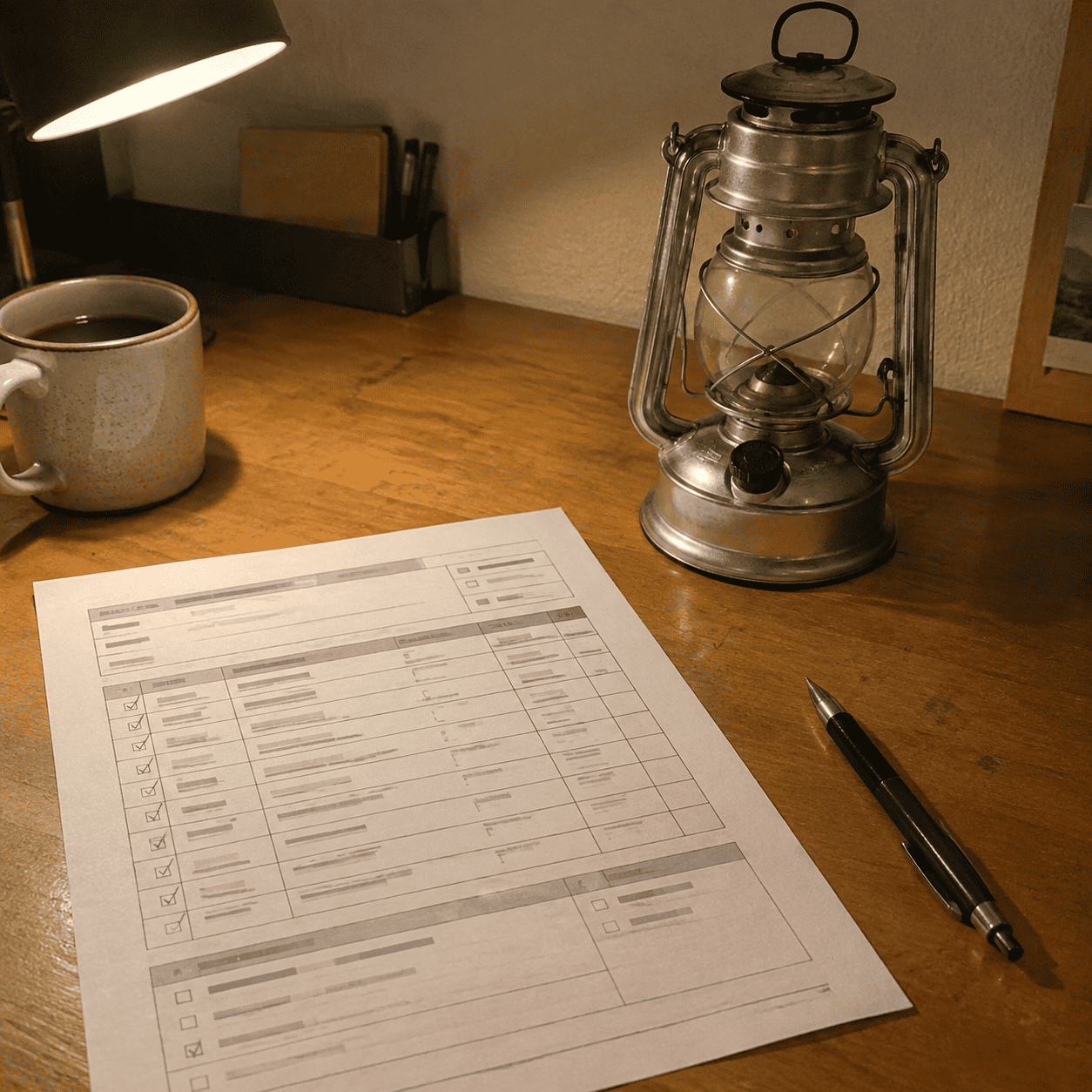
Marketing language creates risk when it enters a purchase order without measurable definitions. Terms such as “super bright,” “long lasting,” “waterproof,” and “heavy duty” do not tell a factory how I will inspect the goods. I replace those phrases with documented configurations, methods, tolerances, and records.
I create purchase-order requirements that identify the SKU, operating modes, battery configuration, performance claims, report references, accessory list, packaging text, inspection method, and change-control process. I also define which documents must be approved before production and which records must accompany final inspection or shipment.
I Translate Claims into Verifiable Requirements
A weak requirement might say:
I require a super-bright, waterproof lantern with long runtime.
A stronger commercial specification would identify:
- I identify the exact product model and approved sample.
- I list the LED, optical, driver, firmware, and battery configurations when they are critical.
- I define each required operating mode and control sequence.
- I state the performance claims permitted on packaging.
- I reference approved reports and their corresponding product configurations.
- I define accessory contents, such as cables, hooks, straps, mounts, cases, or spare parts.
- I approve packaging artwork, manuals, labels, and carton markings.
- I specify functional inspection steps and sampling requirements.
- I require written approval for material, component, firmware, or supplier changes.
- I identify the documents required before mass production and shipment.
I keep numerical acceptance criteria tied to validated evidence. I do not insert an unverified runtime, water-resistance rating, or impact-resistance value simply because a supplier included it in a quotation. When a current standard is relevant, I ask a qualified laboratory or technical professional to confirm the applicable edition, method, sample requirements, and interpretation.
I Evaluate the Supplier Behind the Specification
A strong lighting product still creates procurement risk when the supplier cannot control component changes or communicate deviations. I evaluate the supplier’s product-development and quality-control process alongside the sample.
| Supplier capability | What I examine | Why I examine it |
|---|---|---|
| Requirements review | I check how the supplier confirms modes, batteries, claims, and accessories. | Clear review reduces specification gaps. |
| Document control | I check how reports, drawings, artwork, and revisions are linked. | Controlled records reduce version mistakes. |
| Component management | I check whether critical substitutions require approval. | Uncontrolled changes can alter performance.12 |
| Sample control | I check whether golden samples are identified and retained. | Approved references support consistent inspection. |
| Production inspection | I review incoming, in-process, and final checks. | Process controls matter beyond one tested sample. |
| Corrective action | I examine how failures and complaints are investigated. | A structured response supports long-term sourcing. |
| Communication | I note response quality and technical clarity. | Fast but vague answers do not reduce risk. |
At Ridgimax, I approach lighting development from the perspective of an outdoor-products supplier and product developer. I help translate buyer requirements into product configurations, accessory combinations, packaging details, and acceptance terms. I still recommend independent, qualified evaluation whenever optical performance, battery safety, regulatory compliance, or a specific application requires specialist judgment.
I Include Lighting Accessories in the Same Approval Process
Accessories can create complaints even when the lantern itself works correctly. A poorly fitting cable, weak hook, incompatible mount, or incorrect storage bag can make the complete retail set unacceptable.
I therefore check:
- I verify that every accessory matches the approved bill of materials.
- I test physical fit and basic intended function.
- I confirm cable length, connector type, and included quantities.
- I check hanging and mounting interfaces against the product design.
- I approve the storage arrangement and package presentation.
- I review warning labels and instructions for consistency.
- I define whether replacement accessories must remain available.
I treat the complete sales unit as the procurement object. I do not limit final inspection to whether the LEDs switch on.
Frequently Asked Questions About Camping Lanterns and Lighting Accessories
Does a higher lumen rating mean that a camping lantern is better?
No. I use lumens to evaluate total light output, but I also review distribution, beam intensity, beam distance, runtime, controls, battery configuration, and the intended task. A lower-output lantern with effective diffusion and suitable low modes may fit an area-lighting program better than a higher-output alternative.
Is an ANSI/PLATO FL 1 icon the same as certification?
I do not treat an FL 1 icon as certification or independent proof. I use the icon as a standardized way to communicate a claim, then request the corresponding report. I verify the tested SKU, mode, battery, conditions, method, and applicable edition before relying on the value.
Can I compare the runtime claims shown by two suppliers?
I compare runtime claims only when both values use equivalent operating modes, battery conditions, environments, and test methods. If those details are unavailable, I treat the figures as marketing information rather than purchase-order acceptance criteria. I may request new testing from a qualified provider.
What documents should I request before placing an order?
I usually request product specifications, approved drawings, mode descriptions, battery information, test reports supporting performance claims, accessory lists, packaging artwork, manuals, quality-control plans, and applicable compliance documents. I verify each document against the ordered configuration instead of accepting a generic report for a similar product.
Should lighting accessories appear in the inspection checklist?
Yes. I include cables, hooks, straps, mounts, cases, adapters, spare parts, instructions, labels, and retail packaging when they form part of the ordered set. I define quantity, compatibility, appearance, fit, and functional checks so that inspection covers the complete sales unit.
Conclusion: How Should I Source Camping Lanterns and Lighting Accessories?
I source camping lanterns and lighting accessories as task-based, test-verifiable products rather than collections of headline claims. I define the use case, compare relevant FL 1 metrics under equivalent conditions, verify icons against traceable reports, and place modes, batteries, accessories, documents, and change controls in the PO. Qualified laboratories and compliance professionals should confirm application-specific requirements and current standards. For bulk purchasing, OEM/ODM development, or custom outdoor-lighting projects, I invite buyers to contact Ridgimax with their target market, product task, performance needs, and packaging requirements.
"[PDF] Guide for the Selection of Explosives Detection and Blast Mitigation ...", https://www.nist.gov/system/files/documents/oles/105-07_32812-ExploxivesGuideFinal5-12-08.pdf. ANSI/PLATO FL 1 defines lighting-performance measurements through specified test procedures and conditions, supporting the need to identify the operating mode and test basis when comparing lumen or runtime claims. Evidence role: general_support; source type: institution. Supports: Standardized flashlight metrics are defined under specified procedures and operating conditions, so values obtained under different modes or conditions may not be directly comparable.. Scope note: The standard establishes the importance of test conditions but does not by itself demonstrate how often commercial packaging omits them. ↩
"ANSI Information", https://www.streamlight.com/resources/learning/ansi-information. The ANSI/PLATO FL 1 standard establishes uniform definitions and test methods for selected performance characteristics of portable lighting products, including output, runtime, beam performance, and specified durability measures. Evidence role: definition; source type: institution. Supports: The standard covers defined methods for reporting selected portable-lighting metrics such as light output, runtime, beam distance, peak beam intensity, impact resistance, and water resistance.. ↩
"Realization of the lumen - NIST", https://www.nist.gov/pml/sensor-science/optical-radiation/realization-lumen. Photometric references define the lumen as a unit of luminous flux, or the total quantity of visible light emitted, rather than a measure of beam distribution, target illuminance, glare, or overall task suitability. Evidence role: definition; source type: government. Supports: Lumens are the SI-derived measure of luminous flux, whereas other quantities and design characteristics describe how light is distributed or received.. Scope note: The metrological definition supports the distinction but does not determine whether a particular lantern is usable for a specific camping task. ↩
"ANSI Information", https://www.streamlight.com/resources/learning/ansi-information. Under ANSI/PLATO FL 1 terminology, peak beam intensity expresses the maximum luminous intensity in candela, whereas beam distance is derived from the distance at which the beam provides a specified illuminance. Evidence role: definition; source type: institution. Supports: Peak beam intensity is reported in candela, while beam distance represents the calculated distance at which a beam reaches a defined illuminance level.. ↩
"LED Basics - Department of Energy", https://www.energy.gov/cmei/ssl/led-basics. Lighting science distinguishes total luminous flux from luminous-intensity distribution: lenses, reflectors, and diffusers can redistribute comparable lumen output into substantially different spatial illumination patterns. Evidence role: mechanism; source type: education. Supports: Optics such as diffusers, reflectors, and lenses redistribute a source's luminous flux, producing different intensity patterns and illuminance even when total lumen output is similar.. Scope note: This optical principle explains the possible difference but does not quantify the experience produced by any particular lantern or headlamp. ↩
"ANSI Information", https://www.streamlight.com/resources/learning/ansi-information. ANSI/PLATO FL 1 specifies runtime by reference to the decline from initial output and calculates beam distance using a defined illuminance endpoint, making both metrics dependent on standardized criteria. Evidence role: definition; source type: institution. Supports: The standard's runtime and beam-distance metrics use defined reference points rather than informal descriptions of how long or how far a light works.. Scope note: Exact thresholds and procedures can depend on the applicable edition and should be verified against that edition. ↩
"[PDF] Annex A (normative) Referencing NVLAP accreditation - NIST", https://www.nist.gov/document/nisthb150annexapdf. Laboratory-conformity frameworks such as ISO/IEC 17025 treat method control, laboratory competence, and identification of tested items as elements of reliable test evidence; a packaging symbol alone does not document those elements. Evidence role: expert_consensus; source type: institution. Supports: Conformity-assessment frameworks distinguish a displayed claim from evidence of competent testing and require test records to identify methods, samples, and results.. Scope note: These frameworks establish general evidentiary principles and do not prove that any particular FL 1-style icon is inaccurate. ↩
"[PDF] Upgrading Linear Fluorescent Fixtures to LED in Schools", https://www.energy.gov/eere/ssl/articles/upgrading-linear-fluorescent-fixtures-led-schools-guide-november-2024. Battery-powered LED runtime depends on electrical load and output regulation; consequently, a high-output mode and a low-output mode can yield materially different runtimes from the same energy source. Evidence role: mechanism; source type: research. Supports: Different operating modes impose different electrical loads and output profiles, which changes how long a fixed battery supply can power the light.. Scope note: The size of the difference depends on the product's driver design, battery characteristics, and programmed mode behavior. ↩
"Impact of Thermal Dissipation on the Lighting Performance ...", https://pmc.ncbi.nlm.nih.gov/articles/PMC8776062/. Experimental battery research shows that discharge behavior and available capacity vary with temperature, while regulated LED drivers can deliberately alter current and output over time; both mechanisms can change reported runtime and output curves. Evidence role: mechanism; source type: paper. Supports: Battery discharge capacity and voltage behavior vary with temperature, while driver controls and thermal step-down logic determine how output changes during operation.. Scope note: The cited mechanisms are general, and their practical effect must be measured for the specific battery, driver, firmware, and thermal design. ↩
"Batteries for Electric Vehicles - Alternative Fuels Data Center", https://afdc.energy.gov/vehicles/electric-batteries. Battery-system research and transport frameworks show that chemistry, capacity, packaging, and integration influence runtime, charging requirements, product mass, serviceability, and the conditions under which batteries may be shipped. Evidence role: general_support; source type: research. Supports: Battery chemistry, capacity, form factor, and integration affect energy availability, charging requirements, mass, replacement options, and handling during transport.. Scope note: No single source is likely to quantify all of these effects for camping lanterns, and after-sales consequences depend on the manufacturer's service model. ↩
"[PDF] Lithium Battery Guide for Shippers", https://www.phmsa.dot.gov/sites/phmsa.dot.gov/files/2024-11/Lithium-Battery-Guide-2024.pdf. Government and international dangerous-goods rules distinguish lithium batteries shipped alone, packed with equipment, or contained in equipment, and impose requirements that can vary by battery rating, transport mode, route, and governing jurisdiction. Evidence role: general_support; source type: government. Supports: Dangerous-goods rules distinguish battery configurations and transport modes, with requirements affected by factors such as watt-hour rating, packaging arrangement, and route.. Scope note: Transport rules are revised periodically, and the applicable obligations must be determined from the current rules for the specific shipment. ↩
"[PDF] LED Luminaire Reliability: Impact of Color Shift - Department of Energy", https://www.energy.gov/sites/prod/files/2017/04/f34/lsrc_colorshift_apr2017.pdf. Research on solid-state lighting systems shows that luminous output, beam distribution, efficiency, and thermal behavior arise from interactions among LEDs, optics, drivers, controls, and heat-management components; changing those elements can therefore alter validated performance. Evidence role: mechanism; source type: research. Supports: LED output and beam behavior depend on interacting components, including the emitter, optical system, driver, thermal design, battery, and control logic.. Scope note: The evidence establishes technical plausibility, but the magnitude of any change depends on the substituted component and the product design. ↩


Leave a Reply