
Insulated hand tools can create serious sourcing risk when buyers compare only voltage claims, grip colors, set sizes, or prices. A wrong assumption can affect user safety, regulatory acceptance, and a distributor’s reputation. I recommend using a risk-based qualification process that connects the intended task and target market with documented product evidence and supplier controls.
Insulated hand tools for electrical work are specially designed, marked, and evaluated for defined electrical applications under applicable requirements. Buyers should confirm the intended task, target market, working environment, tool type, product markings, test evidence, and supplier quality controls. An insulated-looking grip or a voltage label alone does not establish suitability.
In buyer inquiries, I often see one short question: “What voltage is the tool rated for?” That question matters, but it does not complete the evaluation. A dependable sourcing decision also requires buyers to examine claim traceability, documentation, production consistency, and the supplier’s ability to maintain the same controls across repeat orders.
What Are Insulated Hand Tools for Electrical Work?
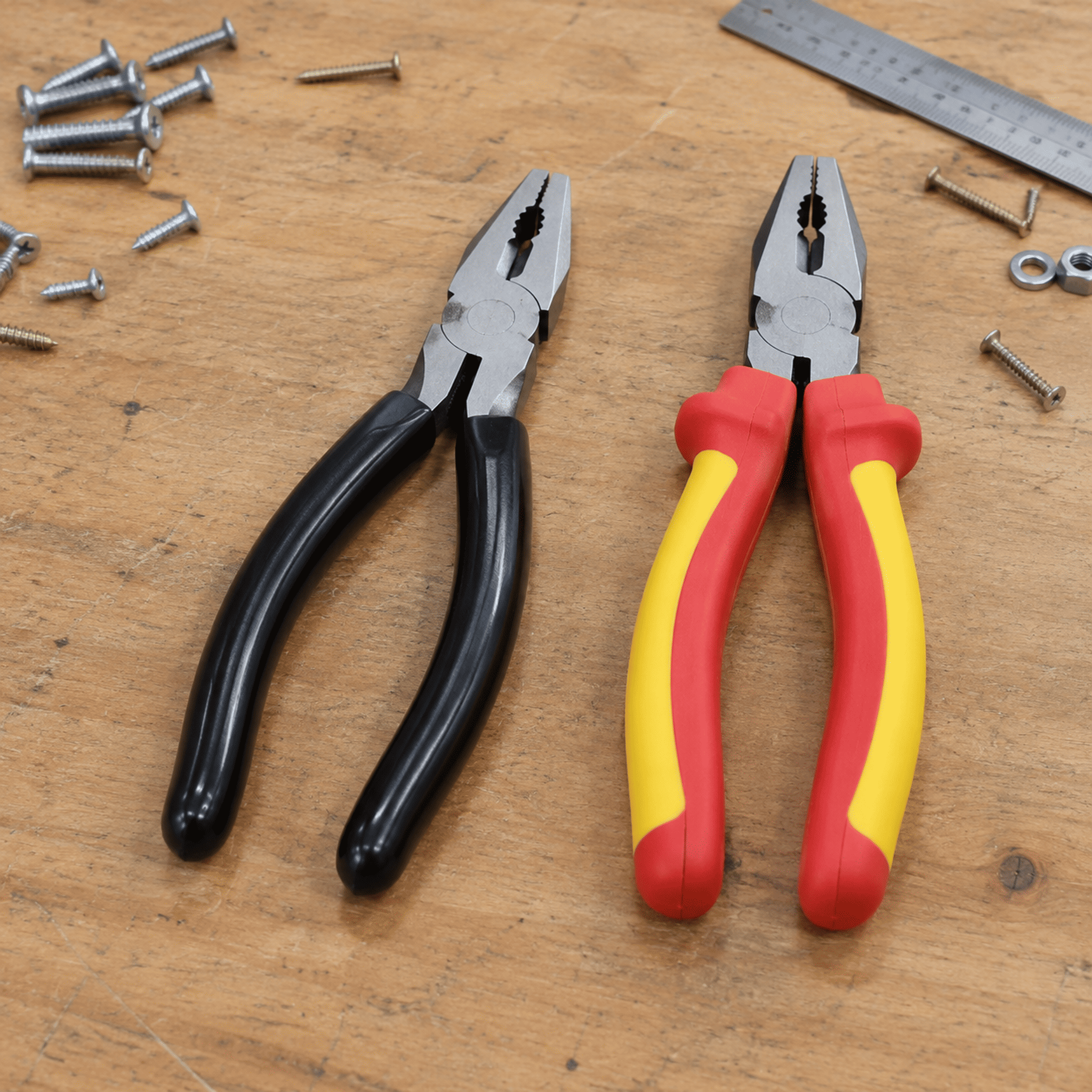
Buyers sometimes assume that any pliers or screwdrivers with thick plastic handles are insulated hand tools. That assumption can turn a visual feature into an unsupported safety claim. I separate ordinary comfort grips from purpose-designed insulated products before I discuss pricing, packaging, or order volume.
Insulated hand tools are tools designed and represented for specific electrical work, with insulation systems, markings, and supporting evidence that correspond to applicable standards or market requirements.1 Ordinary dipped, molded, or cushioned grips may improve comfort and handling, but buyers should not treat those features as proof of electrical insulation performance.2
I Start With the Product Claim
I first ask how the supplier describes the product. Product language influences buyer expectations, packaging claims, user instructions, and potential liability. A supplier should be able to explain whether a tool is:
- An ordinary hand tool with a comfort grip
- A tool with a non-slip or cold-resistant handle
- A tool with an electrically insulating feature for a defined purpose
- A fully documented insulated tool intended for specified electrical applications
These categories are not interchangeable. A red-and-yellow handle does not prove electrical suitability. A thick coating does not establish a voltage rating. A high price does not establish compliance. Likewise, a printed voltage figure does not explain how the claim was developed or verified.
I once received an inquiry for “insulated pliers,” but the reference photo showed conventional pliers with decorative two-color grips. The buyer was mainly matching a competitor’s appearance. I explained that we first needed to clarify the intended product claim and evidence requirements. That conversation changed the project from a color-matching exercise into a product qualification exercise.
Buyers Should Review the Whole Tool
The handle is only one part of an insulated tool.3 Buyers should assess the complete construction, including exposed working areas, insulated zones, transitions, guards, joints, and markings. The relevant details depend on the tool type.
Common insulated tool categories can include:
- Screwdrivers
- Combination pliers
- Long-nose pliers
- Diagonal cutters
- Cable cutters
- Wire strippers
- Wrenches and spanners
- Socket tools
- Certain knives or specialty electrical tools
Each design creates different manufacturing and inspection challenges. For example, pliers contain a moving joint, while a screwdriver combines a shaft, tip, handle, and insulation transition. A supplier’s process controls should reflect those differences.
| Feature | Ordinary comfort-grip tool | Purpose-designed insulated tool |
|---|---|---|
| Primary claim | Comfort, grip, or appearance | Suitability for a defined electrical application |
| Handle appearance | May resemble insulated designs | Appearance should support, not replace, evidence |
| Voltage marking | Usually absent or unsupported | Should be traceable to applicable requirements |
| Documentation | General product specification | Relevant reports, declarations, and traceability records |
| Production controls | Normal dimensional and functional checks | Additional controls appropriate to the insulation claim |
| Buyer evaluation | General quality and performance | Quality, performance, claim validity, and market suitability |
I advise buyers to treat appearance as a design characteristic, not as proof of insulation performance.
How Should Buyers Qualify Insulated Hand Tools?
A voltage number can make comparison feel easy, but it can hide important differences between markets, applications, and product claims. I use a qualification checklist before I request final quotations. This step helps both the buyer and supplier avoid discussing a product that does not fit the intended use.
Buyers should qualify insulated hand tools by defining the target market, electrical task, working conditions, required tool types, applicable requirements, product markings, and supporting documents. They should then connect those needs to sample evaluation, supplier quality controls, packaging language, inspection criteria, and repeat-order traceability.

I Ask Six Questions Before Comparing Offers
I recommend that an importer, brand owner, or distributor provide a clear product brief. The brief does not need to be long, but it should answer the following questions:
-
Where will the tools be sold?
The target country or region affects labeling, language, documentation, and market expectations.4 -
Who is the intended user?
Professional electrical users, industrial maintenance teams, and general hardware customers may have different expectations and purchasing channels. -
What tasks are anticipated?
A buyer should define the tool function and expected environment without assuming that one product suits every electrical task. -
What tool types and sizes are required?
Buyers should specify dimensions, profiles, cutting capacities, materials, finishes, and set composition. -
What claims will appear on the tool and packaging?
Every claim should have a clear basis. Marketing language should match available evidence. -
What documents must the supplier provide?
Buyers should identify expected test reports, declarations, technical files, inspection records, or other evidence before placing an order.
This approach changes the first question from “What voltage is it?” to “What product is appropriate for this market and intended application, and what evidence supports it?”
Working Conditions Also Matter
Environmental details can influence tool selection and risk assessment.5 Buyers may need to consider temperature, moisture, contamination, confined spaces, chemical exposure, tool storage, and inspection practices. I do not treat any insulated hand tool as universally suitable for every environment.
Buyers should also distinguish between product procurement and safe work planning. I work in the B2B tool and supply-chain field. I do not replace the judgment of an electrician, electrical engineer, safety professional, testing laboratory, or certification authority. A qualified professional should evaluate application-specific risks and safe working methods.
I Use a Written Requirement Matrix
A written matrix helps prevent gaps between a quotation, approved sample, production order, and delivered goods.
| Qualification item | Buyer should define | Supplier should provide |
|---|---|---|
| Target market | Country, region, sales channel | Market-relevant product proposal |
| Intended application | Tool function and anticipated environment | Product limitations and specification |
| Tool construction | Type, size, material, finish, insulation design | Technical drawing or product data |
| Claims | Required wording and voltage-related representation | Evidence supporting each claim |
| Markings | Brand, model, traceability, required symbols | Marking artwork and sample |
| Documentation | Required report or declaration type | Current, relevant, and traceable files |
| Quality control | Inspection level and critical characteristics | Control plan and inspection records |
| Repeat orders | Consistency and change-notification needs | Lot traceability and change controls |
I prefer to resolve unclear rows before price negotiation. A low quotation has little value when it covers a different claim, construction, or documentation package.
Which Standards and Documents Apply to Insulated Hand Tools?
Standards discussions can become oversimplified because buyers sometimes request a familiar document number without checking its scope, edition, market acceptance, or relationship to the exact product. I treat a standard reference as the beginning of document review rather than the end of product qualification.
Applicable standards and documents depend on the target market, product category, intended claim, and current legal or commercial requirements. Buyers should verify the latest authoritative sources and confirm whether reports cover the exact model, construction, markings, and manufacturing location. A certificate title or laboratory logo alone is not sufficient evidence.6

Buyers Should Verify Current Requirements Independently
IEC 60900 is commonly referenced in discussions about insulated hand tools for live working7, but buyers should verify the current edition, scope, test provisions, marking rules, and acceptance in each target market. Regional or national requirements, customer specifications, workplace rules, and import obligations may also apply.
I avoid presenting one standard reference as a universal approval. A buyer should consult current authoritative publications and, where needed, obtain advice from a qualified compliance professional or accredited testing body.
The same caution applies to voltage-related statements. Different figures may refer to different concepts, such as:8
- A claimed working voltage
- A test voltage
- A withstand condition
- A classification or marking convention
- A limit that applies only under defined conditions
Those figures should not be combined or interpreted without reviewing the relevant standard and technical evidence. A large test number does not automatically become a safe working limit.
I Review Documents for Relevance, Not Just Existence
A supplier may send a PDF quickly, but speed does not establish credibility. I review whether the document actually relates to the proposed insulated hand tools.
My basic document review includes the following checks:
- Document issuer: I identify the laboratory, certification body, manufacturer, or other issuer.
- Document type: I distinguish a test report, declaration, certificate, product data sheet, and factory inspection record.
- Product identification: I compare the model number, photographs, dimensions, and tool description with the offered product.
- Standard and edition: I check which requirements and edition the document references.
- Test scope: I review whether the tested characteristics align with the proposed claims.
- Manufacturing location: I check whether the named factory matches the intended source.
- Dates and validity: I review issue dates, expiration details where relevant, and later product changes.
- Markings: I compare report details with markings on the product and packaging.
- Traceability: I look for a practical connection between the document, approved sample, purchase order, and production lot.
If a document requires authentication, buyers should verify it through the issuer’s official channel. They should not rely only on a screenshot, cropped file, or supplier-created summary.
Product Changes Can Affect Evidence
Document relevance can change when a supplier modifies materials, tooling, geometry, insulation construction, production methods, or manufacturing sites.9 Buyers should therefore establish a change-notification process.
A useful purchase agreement can require the supplier to obtain written approval before changing:
- Raw material grades or sources
- Insulation materials or formulations
- Tool dimensions or exposed areas
- Molding processes or tooling
- Markings and traceability codes
- Subcontractors or production locations
- Packaging claims and user information
I see this control as especially important for repeat orders. The approved sample and supporting evidence should remain connected to actual production rather than becoming a one-time sales package.
Why Are Price and Set Size Weak Filters for Insulated Hand Tools?
Large sets and low unit prices are easy to compare in a spreadsheet. However, those numbers can distract buyers from claim credibility, tool usefulness, and production consistency. I have seen inquiries begin with a requested piece count even though the buyer had not yet selected the tool functions or evidence requirements.
Price and set size are weak primary filters because they do not show whether insulated hand tools are suitable, properly documented, consistently manufactured, or commercially appropriate for the target market. Buyers should first evaluate tool selection, construction, claims, evidence, quality controls, and supplier capability, and then compare total sourcing cost.
More Pieces Do Not Always Create More Value
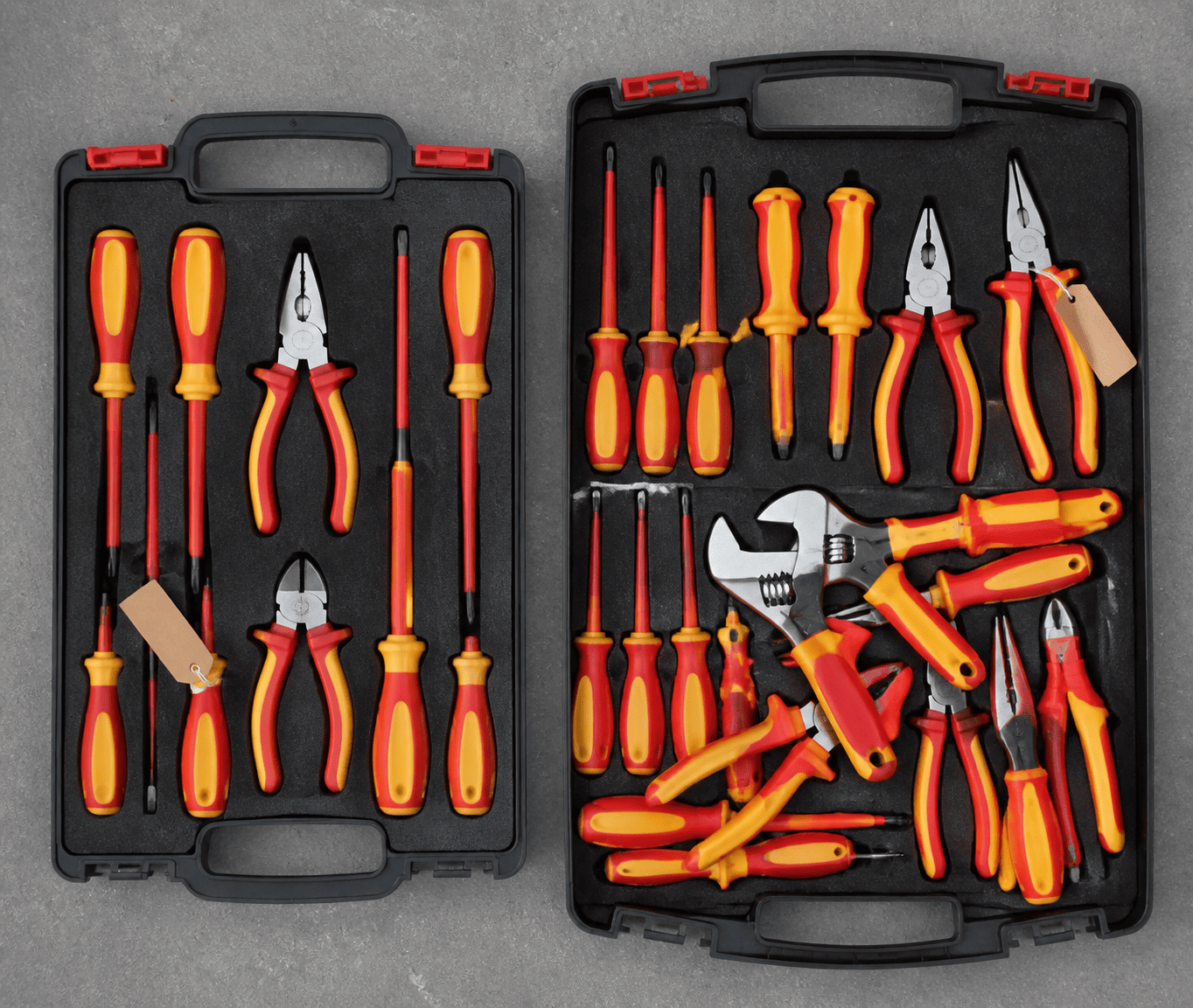
A 20-piece set may appear more competitive than a 10-piece set, but some pieces may duplicate functions or have limited demand. Extra pieces also increase the number of components that require specification control, inspection, replacement planning, packaging space, and inventory management.
I encourage distributors to build sets around real channel needs. A practical set-development process can include:
- Reviewing the most frequently requested tool types
- Separating essential tools from promotional additions
- Confirming dimensions and profiles for the target market
- Assessing whether every included tool has appropriate evidence
- Planning spare or individual replacement items
- Testing case organization and transport durability
- Confirming that packaging claims apply to every relevant component
A carrying case can also create hidden quality issues. Buyers should inspect hinges, latches, molded compartments, labels, and tool retention. A premium tool assortment can lose commercial value if pieces fall out during shipping or the case fails after limited handling.
Buyers Should Compare Total Sourcing Cost
The lowest factory price may not produce the lowest business cost.10 Importers and brand owners can face additional expenses when products require reinspection, relabeling, replacement, customer support, or withdrawal from sale.
I recommend evaluating the following cost categories:
| Cost category | Typical questions |
|---|---|
| Product cost | Does the quotation cover the specified materials, markings, and construction? |
| Verification cost | Who pays for document review, testing, or third-party inspection? |
| Quality cost | What happens if insulation, dimensions, hardness, or finish varies? |
| Packaging cost | Does the case protect the tools and support required labeling? |
| Inventory cost | Can individual tools be replenished, or must the complete set be replaced? |
| Reputational cost | How could unsupported claims affect the buyer’s brand and channel relationships? |
| Change cost | How will the supplier communicate material, tooling, or factory changes? |
A higher initial price may be commercially reasonable when it supports better materials, stronger process control, credible evidence, or more dependable repeat production. However, price alone cannot prove those advantages. Buyers still need to verify them.
Sample Approval Should Be Specific
A buyer should not approve an insulated tool set only by looking at one display sample. I suggest recording measurable characteristics and critical requirements. Depending on the product, sample approval may cover:
- Tool dimensions and weight
- Material and heat-treatment specifications
- Jaw, tip, or cutting-edge geometry
- Surface finish
- Handle and insulation construction
- Marking content, location, and legibility
- Functional operation
- Case fit and retention
- Packaging and label artwork
- Document references
A signed or sealed sample can support communication, but it should not replace incoming inspection, production controls, or application-specific professional evaluation.11
How Can Buyers Evaluate an Insulated Hand Tool Supplier?
A polished catalog may help buyers identify products, but it does not reveal how a supplier controls materials, documents, outsourced processes, or repeat orders. I evaluate whether the supplier can convert an approved specification into consistent production and communicate clearly when a problem or change occurs.
Buyers should evaluate an insulated hand tool supplier through its technical communication, claim traceability, quality plan, material controls, inspection capability, document management, customization process, and repeat-order controls. A suitable supplier should answer detailed questions clearly, disclose limitations, maintain product records, and support verification instead of relying on appearance or broad assurances.
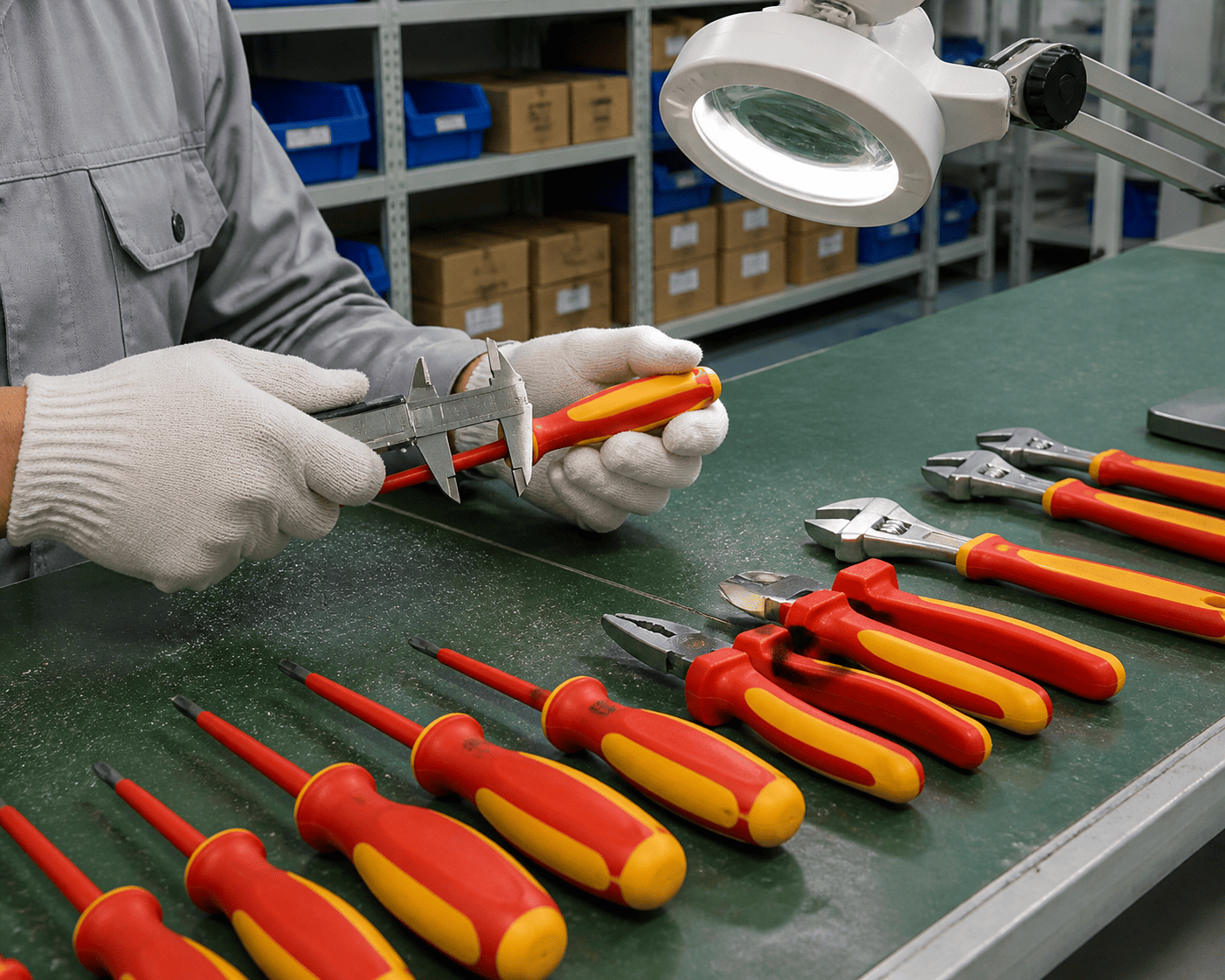
I Look for Specific, Verifiable Answers
Strong suppliers do not need to claim that every request is easy. They should instead explain what they manufacture, what they source, what they inspect, and which evidence applies.
I would ask a potential supplier questions such as:
- Which factory performs forging, machining, heat treatment, finishing, and insulation application?
- Which processes are completed in-house, and which processes are subcontracted?
- How are insulation materials identified and controlled?
- How are approved drawings and specifications linked to production?
- Which characteristics are checked during production and final inspection?
- How are markings applied and verified?
- How are nonconforming products separated?
- How are production lots traced?
- How are engineering or material changes approved?
- Can the supplier support third-party inspection or independent testing when required?
The quality of the answer matters as much as the speed. A vague “no problem” response can hide gaps. A structured answer that identifies limits and requests missing information often indicates a more mature procurement process.
OEM and ODM Work Require Claim Control
Customization adds value for brand owners, but it also creates new responsibilities. A new logo, handle color, case, or packaging design may appear simple. However, a deeper construction change can affect the relevance of existing evidence.
At Ridgimax, we approach OEM and ODM discussions by first clarifying the intended market, product specifications, customization scope, quality expectations, and required documents. Our product and supply-chain role does not make us a certification authority. Buyers should independently confirm market-specific requirements and arrange qualified evaluation when necessary.
A controlled customization project should define:
- Branding: Logo position, size, method, and durability
- Color: Approved color standard and acceptable variation
- Markings: Required content and traceability format
- Construction: Fixed materials, dimensions, and exposed areas
- Packaging: Claims, warnings, language, and barcode information
- Inspection: Critical characteristics and acceptance criteria
- Documentation: Evidence that applies to the customized model
- Change control: Written approval before specification changes
Repeat-Order Capability Is a Core Supplier Test
A first sample can receive special attention. Repeat production shows whether the supplier has stable systems. I therefore ask how the factory controls routine orders after the development team has moved to another project.
Useful indicators can include:
- Documented bills of materials
- Controlled drawings and revisions
- Incoming material checks
- In-process inspection points
- Final inspection records
- Lot or batch identification
- Calibration controls for relevant equipment
- Nonconformance and corrective-action procedures
- Approved subcontractor management
- Retained samples or reference standards
Buyers should verify these controls through suitable audits, inspections, document review, or professional quality support. They should also define responsibilities in the purchase contract. No checklist can eliminate risk, but a documented process can make risk more visible and manageable.
Frequently Asked Questions
Are all tools with rubber or plastic handles insulated?
No. Rubber-like, plastic, dipped, or molded handles may provide comfort, grip, color, or limited separation from metal, but appearance and material type do not prove suitability for electrical work. I recommend checking the product claim, applicable requirements, markings, construction, and supporting evidence for the exact model.
Does a voltage marking guarantee that an insulated tool is safe?
No. A voltage marking should not be treated as a universal safety guarantee. Buyers need to verify what the figure means, which requirement supports it, and whether the documentation covers the exact product. Users must still follow de-energization, lockout procedures, training, inspection, PPE, and other required controls.
Should buyers always choose the insulated tool set with the most pieces?
No. Buyers should choose a set that matches target users, common tasks, channel demand, and replacement needs. Every included component should have a defined specification and appropriate evidence. Unnecessary pieces can increase inspection, inventory, packaging, and warranty costs without adding meaningful commercial value.
What documents should an importer request from a supplier?
The required documents depend on the market and product claim. Importers may need relevant test reports, declarations, technical specifications, drawings, marking files, quality records, and traceability information. I recommend verifying document scope, issuer, edition, model identity, manufacturing location, dates, and authenticity with qualified support.
Do insulated hand tools replace de-energization and PPE?
No. Insulated hand tools are only one layer of risk control.12 They do not replace de-energization, lockout or tagout procedures, appropriate personal protective equipment, training, supervision, tool inspection, or workplace-specific safety practices. Qualified electrical and safety professionals should determine the controls required for each application.
Conclusion
Choosing insulated hand tools requires more than comparing voltage labels, handle colors, prices, or set sizes. I recommend starting with the target market, intended task, environment, tool types, claims, and current applicable requirements. Buyers should then verify markings, documents, sample details, production controls, and repeat-order consistency. Insulated tools remain only one part of a wider electrical safety system. If your business is sourcing or developing an OEM/ODM tool range, contact Ridgimax to discuss product specifications, customization needs, quality controls, and the documentation your market requires.
"IEC 60900:2018", https://webstore.iec.ch/en/publication/27266. IEC 60900 specifies requirements and tests for insulated and insulating hand tools intended for live working within defined voltage limits, supporting the distinction between purpose-designed electrical tools and ordinary handled tools. Evidence role: definition; source type: institution. Supports: IEC 60900 defines requirements and tests for insulated and insulating hand tools intended for live working at specified voltage limits.. Scope note: The standard has a defined scope and does not by itself establish legal acceptance in every jurisdiction or suitability for every electrical task. ↩
"eTool : Construction - Electrical Incidents - Power Tools", http://www.osha.gov/etools/construction/electrical-incidents/power-tools. IEC 60900 bases the classification of insulated hand tools on specified design, testing, and marking requirements; the mere presence of a dipped, molded, or cushioned grip is therefore not evidence of conformity. Evidence role: general_support; source type: institution. Supports: Applicable insulated-tool standards rely on defined construction, testing, and marking requirements rather than handle appearance alone.. Scope note: The standard does not establish whether any particular untested comfort-grip tool provides incidental electrical resistance. ↩
"iec-60900-live-working-hand-tools-for-use-up-to- ...", https://www.chisentools.com/resources/hand-tools-standards/iec-60900-live-working-hand-tools-for-use-up-to-1000v-ac-and-1500v-dc.pdf. IEC 60900 applies constructional, dimensional, mechanical, and electrical requirements to complete tool designs, indicating that the handle alone is not the sole determinant of insulated-tool performance. Evidence role: mechanism; source type: institution. Supports: IEC 60900 evaluates design-specific characteristics of complete insulated tools, including insulation, guards, exposed conductive portions, mechanical performance, and dielectric behavior.. Scope note: The particular requirements vary by tool category and by the edition of the standard. ↩
"The Blue Guide on the implementation of the product rules 2022 is ...", https://single-market-economy.ec.europa.eu/news/blue-guide-implementation-product-rules-2022-published-2022-06-29_en. European Commission product-compliance guidance links market access to jurisdiction-specific requirements for markings, instructions, language, technical documentation, and economic-operator responsibilities. Evidence role: general_support; source type: government. Supports: Official product-compliance guidance shows that required markings, instructions, languages, technical documentation, and importer duties depend on the jurisdiction in which a product is placed on the market.. Scope note: European Union guidance illustrates the market-specific principle but does not describe the requirements of every country or determine the classification of every insulated hand tool. ↩
"eTool : Construction - Electrical Incidents - Power Tools", http://www.osha.gov/etools/construction/electrical-incidents/power-tools. IEC 60900 includes environmental conditioning and performance tests relevant to factors such as moisture and low temperature, supporting the inclusion of working conditions in insulated-tool risk assessment. Evidence role: mechanism; source type: institution. Supports: Insulated-tool standards use environmental conditioning and tests such as moisture-related dielectric evaluation and low-temperature impact assessment because environmental exposure can affect insulation performance.. Scope note: These test conditions do not cover every possible contaminant, chemical exposure, storage practice, or workplace environment mentioned in the article. ↩
"ISO/IEC 17025:2017, Section 7.8 - Reporting of Results", https://www.nist.gov/document/sop-1-calibration-certificate-eval-app-b-c-20190506pdf. ISO/IEC 17025 and ILAC guidance associate valid laboratory reporting with a defined accreditation scope, identified test items, specified methods, and complete results; a laboratory logo alone does not demonstrate that a particular product claim was assessed. Evidence role: general_support; source type: institution. Supports: Laboratory competence and reported results are tied to an accredited scope, identified test items, specified methods, and documented results rather than to a logo alone.. Scope note: These conformity-assessment principles support document scrutiny but do not determine the legal sufficiency of a particular certificate in every market. ↩
"IEC 60900:2018", https://webstore.iec.ch/en/publication/27266. The International Electrotechnical Commission identifies IEC 60900 as covering insulated and insulating hand tools used for live working at maximum voltages of 1,000 V AC and 1,500 V DC. Evidence role: case_reference; source type: institution. Supports: The IEC identifies IEC 60900 as the standard covering insulated and insulating hand tools used for live working at specified maximum voltages.. ↩
"Insulated Tool Test Voltage Explained | IEC 60900 ...", https://sip1000vtools.com/blogs/resource-center/what-voltage-are-insulated-tools-tested-to. IEC 60900 distinguishes specified maximum working voltages from dielectric test conditions, so a laboratory test voltage is not equivalent to an authorized working-voltage limit. Evidence role: mechanism; source type: institution. Supports: IEC 60900 distinguishes the maximum voltage for intended use from the higher voltages and conditions employed in dielectric verification tests.. Scope note: The exact values and procedures must be taken from the applicable edition and tool-specific provisions rather than inferred from a general summary. ↩
"Manufacturing Site Change Supplements: Content and ...", https://www.fda.gov/regulatory-information/search-fda-guidance-documents/manufacturing-site-change-supplements-content-and-submission. The European Commission's Blue Guide states that changes in product design or characteristics and changes in applicable standards must be taken into account when maintaining conformity in series production. Evidence role: mechanism; source type: government. Supports: Official conformity guidance requires manufacturers to consider changes in product design, characteristics, and applicable standards when maintaining conformity in series production.. Scope note: This directly describes the European Union conformity framework; reassessment triggers and manufacturing-site rules may differ under other schemes. ↩
"[PDF] Determination of optimal pricing and warranty policies", https://researchrepository.wvu.edu/cgi/viewcontent.cgi?article=4171&context=etd. Cost-of-quality literature distinguishes purchase or production expenditure from appraisal, rework, scrap, warranty, return, and other failure costs, supporting the use of total cost rather than unit price alone in sourcing analysis. Evidence role: general_support; source type: paper. Supports: Cost-of-quality research recognizes prevention, appraisal, internal-failure, and external-failure costs that can make acquisition price an incomplete measure of total business cost.. Scope note: This framework does not establish that a higher-priced insulated tool will necessarily have lower failure costs or better quality. ↩
"Statistical Quality Inspection Methodology in Production ... - PMC", https://pmc.ncbi.nlm.nih.gov/articles/PMC9822495/. ISO 9001 addresses controlled production, monitoring and measurement, product release, externally provided processes, and traceability where required, indicating that approval of one reference sample is not a substitute for continuing quality controls. Evidence role: general_support; source type: institution. Supports: Quality-management standards treat controlled production, monitoring, inspection, release, and traceability as ongoing activities rather than relying on one preproduction sample.. Scope note: ISO 9001 is a general quality-management standard and does not prescribe the electrical tests or inspection frequency required for a specific insulated-tool product. ↩
"1910.333 - Selection and use of work practices.", http://www.osha.gov/laws-regs/regulations/standardnumber/1910/1910.333. OSHA's electrical work rules treat de-energization and lockout or tagout as primary controls and prescribe insulated tools and personal protective equipment for applicable hazards, confirming that insulated hand tools are supplementary rather than complete protection. Evidence role: expert_consensus; source type: government. Supports: OSHA electrical-safety rules generally require exposed live parts to be de-energized before work unless specified exceptions apply and separately require protective equipment and insulated tools for relevant hazards.. Scope note: The cited OSHA provisions govern covered United States workplaces; other jurisdictions may use different terminology or impose additional controls. ↩



Leave a Reply