

This sleeping bags and pads buying guide addresses a common procurement problem: buyers often compare isolated specifications instead of complete sleep systems. That approach can create warmth complaints, poor fit, and mismatched inventory. I recommend starting with the use scenario, then aligning bag construction, pad insulation, sizing, quality controls, and supplier capabilities.
A practical sleeping bags and pads buying guide should match both products to the expected climate, ground condition, camping style, and user profile. Buyers should evaluate temperature and insulation data under identifiable test methods, specify suitable dimensions, compare complete specifications, and verify supplier quality controls before approving a bulk order.
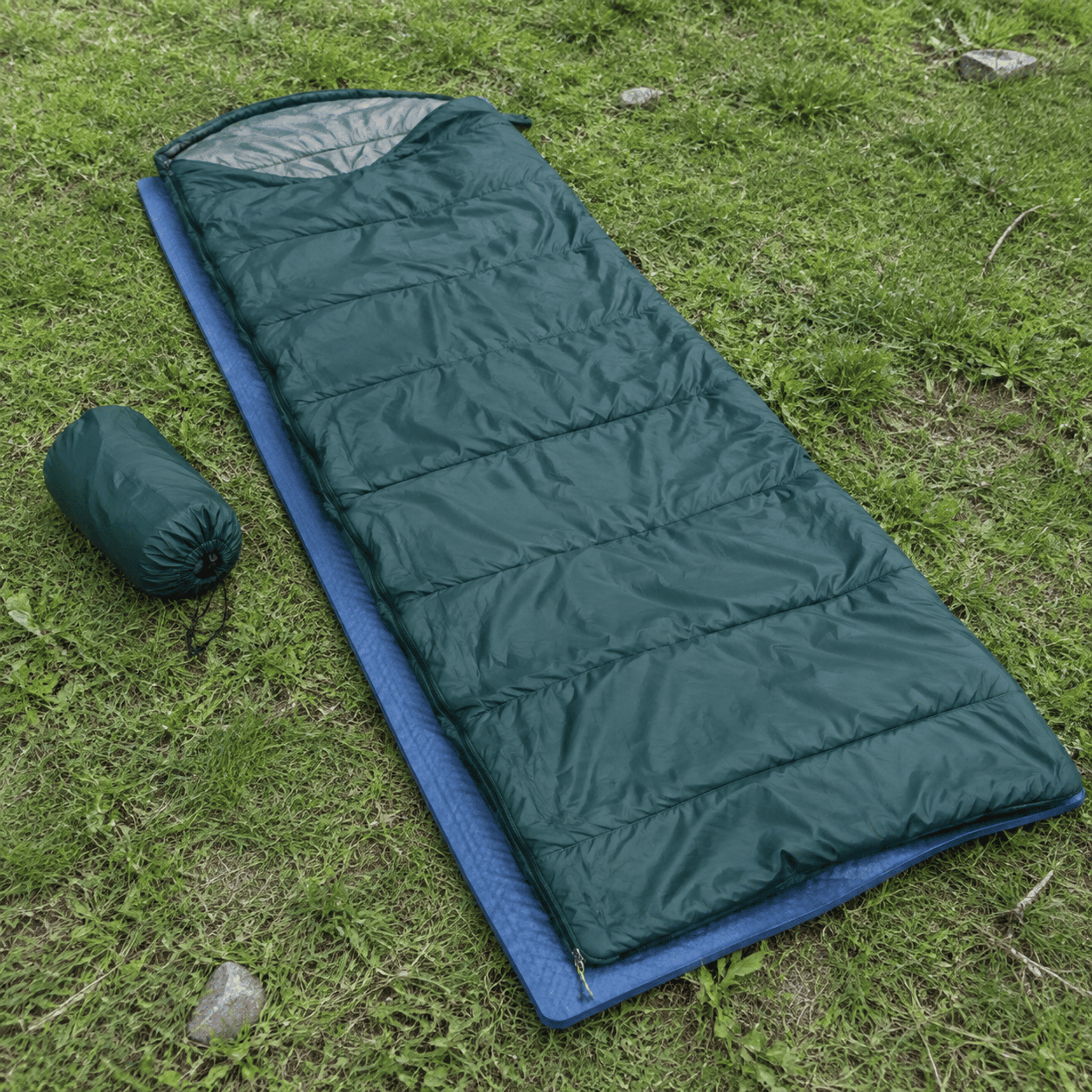
I have handled sleeping-pad inquiries in which the first request focused on one feature, such as thickness or packed size. I usually step back and ask where the product will be used. That simple change turns a vague product search into a more reliable procurement brief.
How Should a Sleeping Bags and Pads Buying Guide Begin With Use Scenarios?
A buyer may begin by asking for a “warm sleeping bag” or a “thick camping mat.” Those descriptions sound clear, but they leave major risks unresolved. A product that works for a summer campsite may disappoint users on cold, wet, rocky, or highly conductive ground.
I recommend defining the climate, ground surface, camping style, transport method, and target user before selecting specifications. These factors determine which insulation level, dimensions, materials, construction, weight, packed volume, and price tier make commercial sense for a particular market.
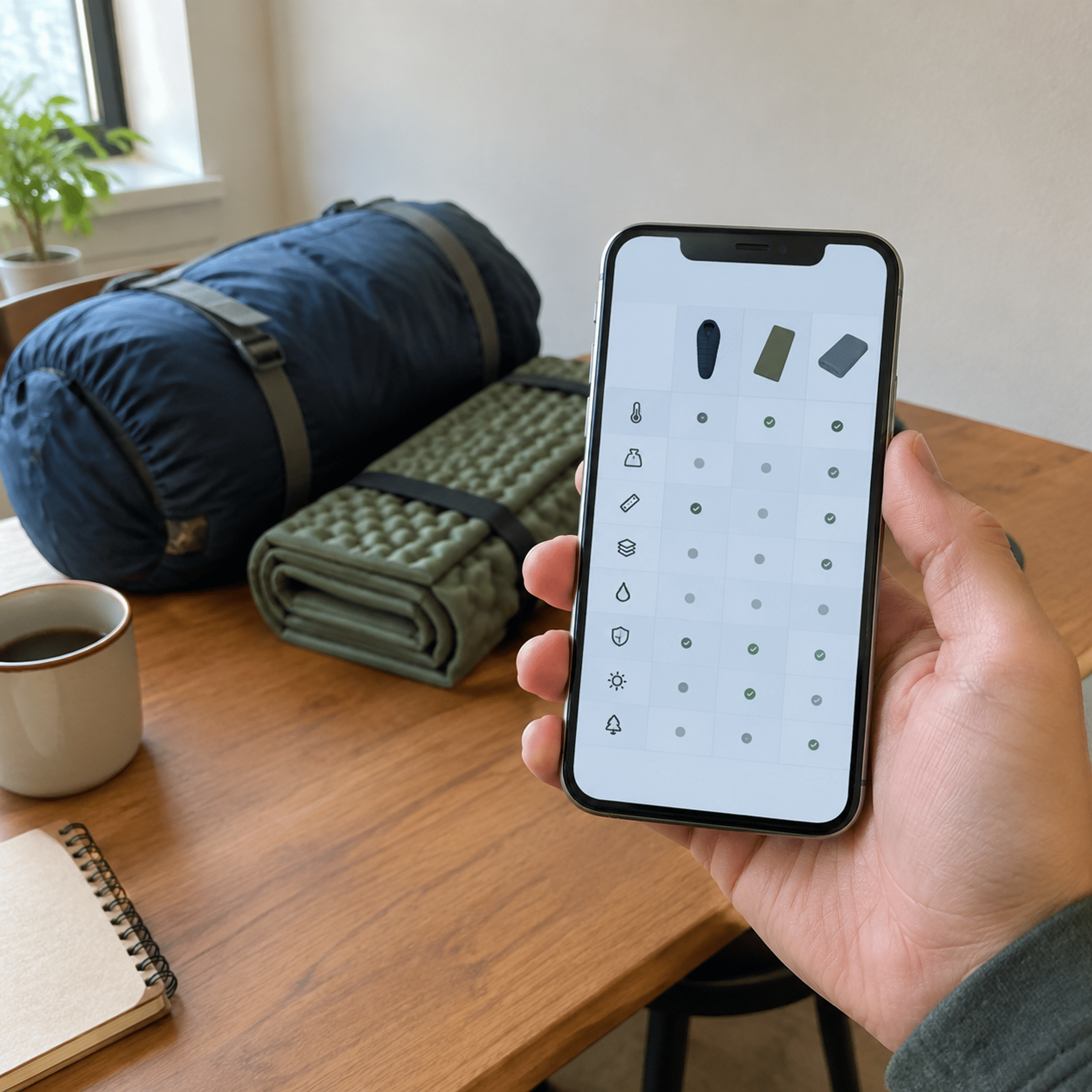
Start With a Written Use-Scenario Brief
I use requirement clarification because broad labels such as summer, three-season, and winter do not have one universal meaning1. A three-season product sold in Northern Europe may face different conditions from one sold in Southeast Asia or the Middle East.
I recommend that purchasing teams document at least these points:
- Sales region: Country, climate zone, altitude, and typical season
- Expected nighttime conditions: Target air temperature and likely temperature variation
- Ground conditions: Grass, sand, compacted soil, snow, rock, vehicle floor, or tent platform
- Camping style: Backpacking, car camping, family camping, festival use, trekking, or emergency preparedness
- Transport limitations: Maximum acceptable weight and packed volume
- Target users: Adult height range, body shape, experience level, and comfort expectations
- Channel position: Entry-level, mid-range, premium, rental, promotional, or specialist outdoor
- Care expectations: Home washing, spot cleaning, repairability, and storage requirements
I often see buyers ask, “Which thickness sells best?” I reframe that question as, “Which construction suits your intended ground, insulation target, comfort expectation, packed-size limit, and retail price?” Thickness alone does not provide a complete measure of thermal resistance or user comfort.2
Translate the Scenario Into a Specification Matrix
The following matrix shows how I would organize an initial brief. The entries are decision priorities rather than universal product recommendations.
| Use scenario | Main procurement priorities | Common mismatch risk |
|---|---|---|
| Warm-weather backpacking | Low packed weight, compact volume, appropriate insulation data, durable valves | Selecting only by low weight and ignoring ground insulation |
| Family car camping | Comfort, usable width, easy inflation, surface feel, durability | Buying a narrow backpacking design for comfort-focused users |
| Cool or variable climates | Verified bag rating method, pad thermal resistance, draft management | Treating the bag rating as the whole system |
| Wet or humid markets | Drying behavior, fabric treatment, storage instructions, packaging ventilation | Assuming a water-resistant shell makes the complete system waterproof3 |
| Rocky or abrasive ground | Fabric durability, underside construction, repair options, seam quality | Choosing solely by thickness or appearance |
| E-commerce assortment | Clear dimensions, accurate packed size, consistent labeling, simple comparison | Returns caused by unclear size and performance descriptions |
I treat this matrix as the first version of the request for quotation. I then ask potential suppliers to respond against every field instead of sending a general catalog page. This method helps procurement teams compare offers on the same basis.
A useful specification starts with the market scenario. A product name should never replace a complete requirement.
Why Should Sleeping Bags and Pads Be Evaluated as One Sleep System?
Buyers can choose a sleeping bag with an impressive temperature label and still receive warmth complaints. The ground can draw heat from the sleeper, while the insulation beneath a person can compress.4 A poorly matched pad therefore creates a weakness that the bag cannot automatically resolve.
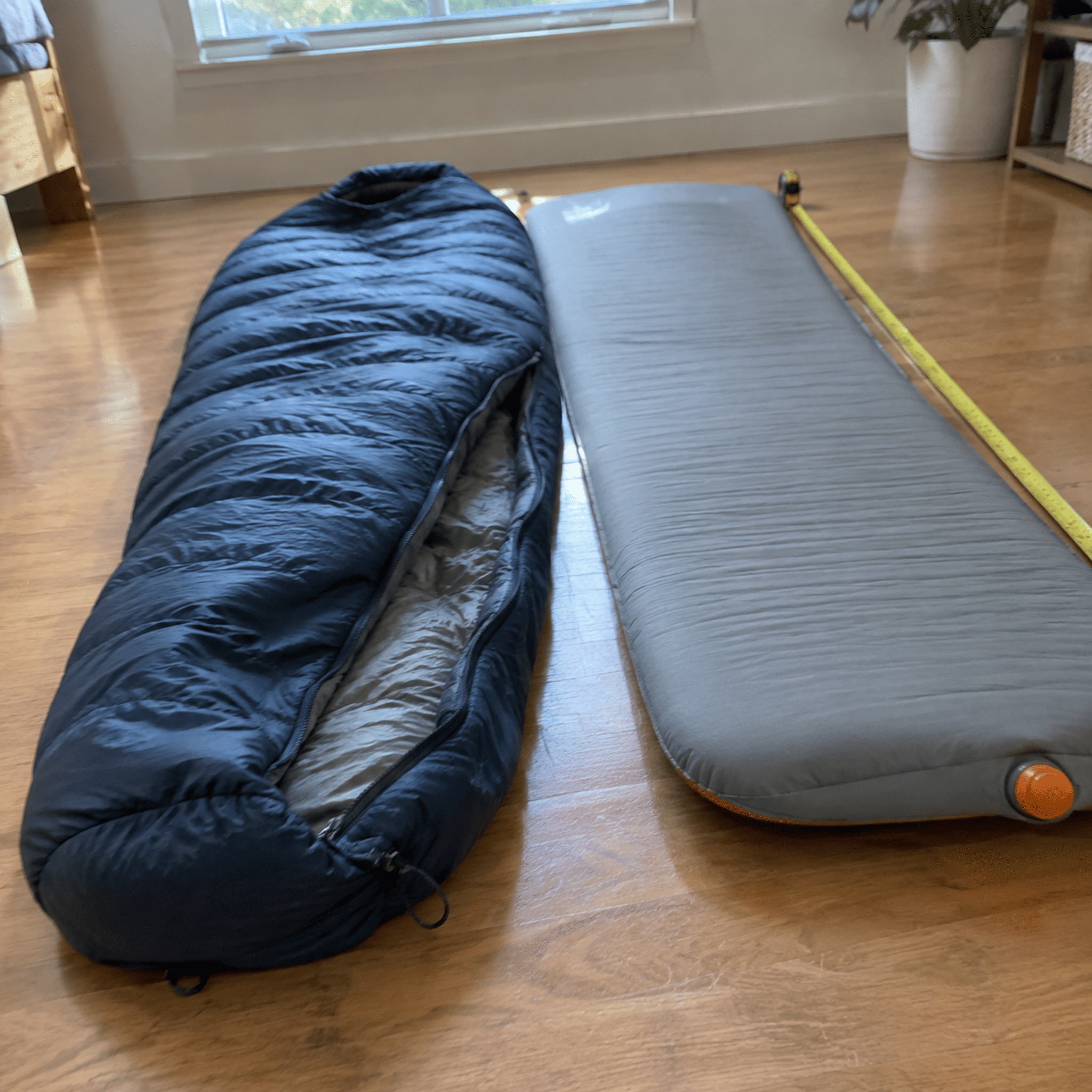
I evaluate sleeping bags and pads as one sleep system.5 The bag manages insulation around the sleeper, while the pad provides cushioning and limits heat transfer to the ground. Both products must suit the same conditions, user expectations, and labeling framework.
Treat Temperature Labels as Conditional Evidence
Temperature ratings require careful interpretation. The ISO 23537-1 standard specifies requirements and test methods for the thermal and dimensional characteristics of sleeping bags intended for sports and leisure activities. Its scope and test conditions matter.
I recommend that buyers request the underlying evidence rather than accepting an unsupported icon or temperature number. A useful review should identify:
- The exact standard and edition used
- The laboratory or test organization
- The tested product model, size, and construction
- The reported rating categories
- The date and report reference
- Any differences between the tested sample and production specification
I do not treat a laboratory rating as a universal comfort guarantee. Clothing, metabolism, wind exposure, humidity, shelter, food intake, fatigue, body size, and sleeping position can affect real-world experience.6 Buyers should also avoid presenting an extreme or survival-related figure as a routine comfort target.7
A qualified testing organization should evaluate application-specific temperature claims. Procurement teams should verify that packaging, online listings, instruction sheets, and product labels describe the test results consistently.
Review Pad Insulation Under a Named Method
For camping mattresses, ASTM F3340 provides a standardized method for evaluating thermal resistance using a guarded hot plate. I recommend checking the currently applicable edition and confirming that a report covers the exact pad construction under consideration.
A pad review should include more than one headline number:
| Pad field | What I ask the supplier to provide | Why it matters |
|---|---|---|
| Thermal resistance | Test method, result, sample identity, and report | It supports like-for-like insulation comparison |
| Construction | Air chamber, foam type, fill, layer structure, and bonding method | Different constructions can behave differently despite similar thickness |
| Dimensions | Length, width, thickness, and stated tolerances | Dimensions affect fit, comfort, weight, and packaging |
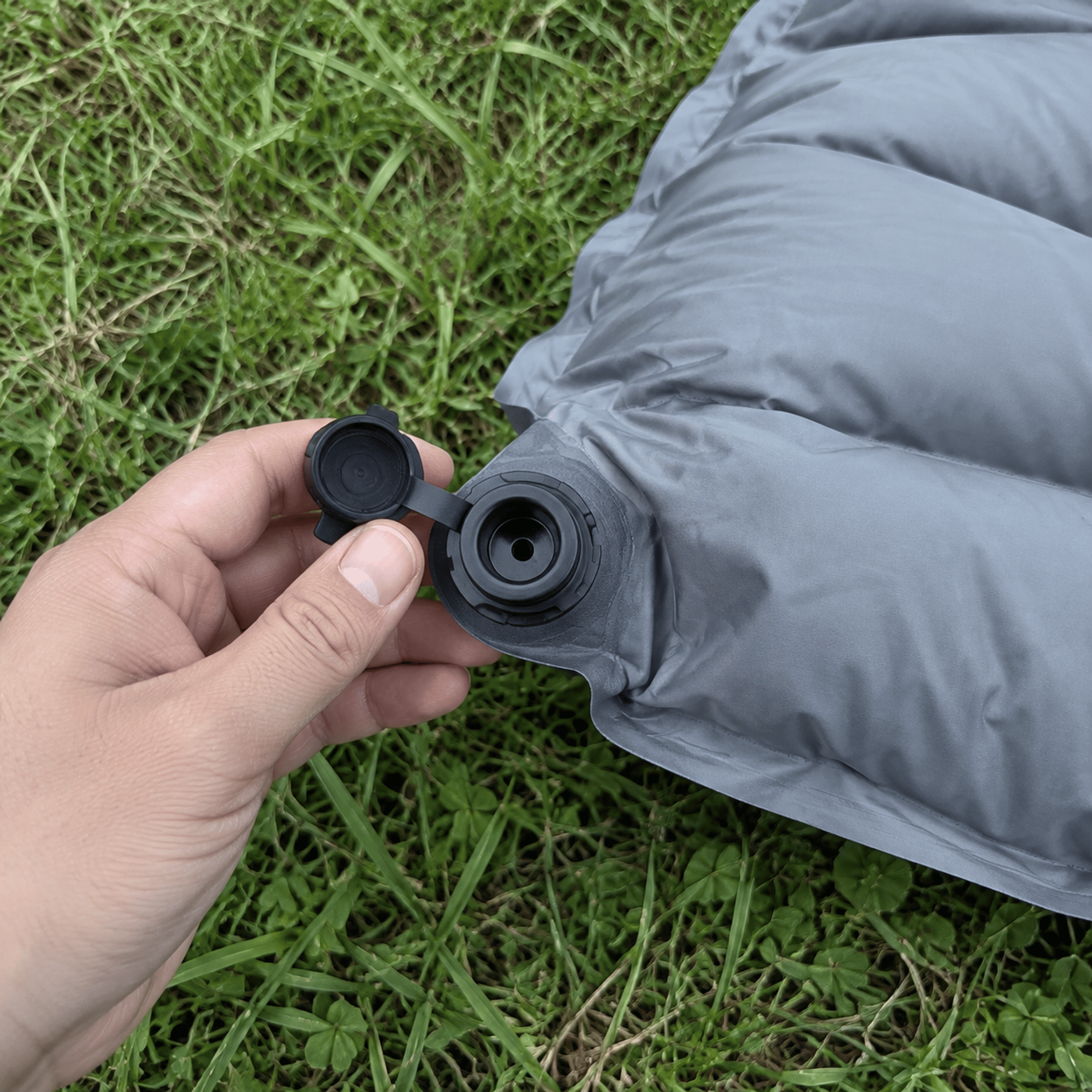
| Valve system | Valve type, inflation method, and replaceability | Valve performance affects usability and complaint risk |
| Surface and base | Fabric, coating, lamination, and texture | These factors influence feel, noise, cleaning, and durability |
| Repair provision | Patch kit, spare components, and instructions | Repair support can reduce avoidable returns |
I also check physical compatibility. A wide bag paired with a narrow pad may create an unstable experience. A rectangular sleeping bag and a tapered ultralight mat may target different users. Likewise, a bulky comfort pad may not belong in a backpacking bundle even if both products meet separate quality requirements.
For high-risk environments or safety-critical claims, I recommend independent professional review. Neither a product label nor a supplier statement should replace qualified evaluation under the intended conditions.
How Should Buyers Specify Sleeping Bag Sizes?
A nominal “one-size” sleeping bag simplifies a catalog, but it may create poor fit across diverse markets. A short bag restricts taller users, while excessive internal space can affect comfort and perceived warmth.8 Unclear sizing can also cause e-commerce returns and distributor complaints.9
I recommend matching sleeping-bag length and width to the target users’ body-height range, clothing, sleeping position, and expected fit. Buyers should specify finished dimensions, recommended user range, measurement method, tolerances, and size labels rather than relying on names such as regular or large.

Separate Product Dimensions From User Recommendations
I distinguish between the dimensions of a sleeping bag and the height of the intended user. Those values are not interchangeable. Hood shape, foot-box design, shoulder width, insulation loft, zipper layout, and measurement method can change the available internal space.
A complete size specification should state:
- Finished overall length
- Internal usable length, if the design allows consistent measurement
- Shoulder width or circumference
- Hip and foot-box dimensions
- Recommended user-height range
- Measurement points and test condition
- Allowed production tolerances
- Size-label wording
- Packed dimensions
- Net product weight and stated tolerance
I recommend that brands create a size chart that customers can understand without interpreting factory terminology. The chart should match packaging, product pages, distributor data sheets, and carton labels.
Build the Size Range Around Market Evidence
I would not copy a competitor’s size range without checking the target market. Instead, I would review available channel data, customer service records, return reasons, and distributor feedback. A brand may need two or three lengths if one nominal size excludes a meaningful share of its customers.
The same logic applies to sleeping pads. Buyers should consider whether the bag and pad dimensions work together:
| Compatibility question | Procurement implication |
|---|---|
| Does the pad support the user’s shoulder and hip area? | Confirm usable width, not only the widest external point |
| Does the bag remain stable on the pad? | Review surface texture, shape, and attachment features |
| Do the products fit the intended tent or cot? | Compare complete dimensions before creating a bundle |
| Does the user wear extra clothing inside the bag? | Allow suitable internal volume without making unsupported warmth claims |
| Does the assortment serve taller users? | Consider a separate long version with clear labeling |
| Are products sold online? | Use diagrams and measurement instructions to reduce ambiguity |
One recurring question I encounter is whether a longer pad is automatically better. I explain that greater length can improve coverage for some users, but it can also increase weight, packed volume, carton size, and material cost. The correct decision depends on the target customer and sales proposition.
Approve Size With Physical Samples
I recommend that buyers evaluate pre-production samples rather than approving dimensions from drawings alone. A sample review can identify tight foot boxes, misleading measurement points, unstable bag-and-pad combinations, awkward valve positions, and packaging that compresses the product excessively.
A qualified inspection provider can confirm production dimensions against the approved specification. Buyers should define sampling plans and acceptance criteria in advance. If a team uses an acceptance quality limit system, it should establish the inspection level and defect classification with reference to an appropriate standard, such as ISO 2859-1, rather than treating “AQL” as a complete instruction by itself10.
How Can Buyers Compare Sleeping Bags and Pads Like for Like?
Supplier quotations often look comparable until buyers inspect the details. One offer may exclude a compression sack, use a different insulation weight, or report nominal dimensions without tolerances. Another may quote a tested model but propose a modified production construction. Those gaps can distort both price and risk.
I compare sleeping bags and pads only after normalizing the specifications. Each quotation should cover the same materials, construction, size, accessories, test evidence, packaging, inspection criteria, order quantity, and commercial terms. A lower price has little meaning when the compared products are materially different.
Use a Complete Comparison Sheet
I recommend locking the comparison fields before requesting final quotations. Buyers can adapt the following structure to their product category and market.
| Category | Sleeping bag comparison fields | Sleeping pad comparison fields |
|---|---|---|
| Intended use | Climate, season, shelter, user profile | Climate, ground, shelter, user profile |
| Materials | Shell, lining, insulation, trims | Face fabric, base fabric, foam or fill, coating |
| Construction | Shape, baffles, hood, foot box, seams | Chamber design, foam structure, lamination, edge construction |
| Performance evidence | Standard, report, sample identity, rating terminology | Thermal test method, report, sample identity |
| Dimensions | Length, width, circumference, tolerances | Length, width, thickness, tolerances |
| Weight | Net weight and? measurement method and tolerance | Net weight, measurement method, and tolerance |
| Components | Zipper, pullers, drawcords, storage sack | Valve, cap, pump sack, repair kit |
| Packaging | Storage method, retail pack, warnings | Rolled or folded format, retail pack, instructions |
| Quality control | Incoming, in-process, final inspection | Material, bonding, leak, valve, and final inspection |
| Commercial terms | MOQ, customization scope, tooling, lead-time basis | MOQ, customization scope, tooling, lead-time basis |
I ask suppliers to mark exceptions clearly. I do not assume that an unanswered field complies with the request. This practice is especially important when buyers compare OEM and ODM offers because suppliers may interpret the same product description differently.
Align Product Tiers With Local Demand
A B2B assortment usually needs more than one specification tier. However, I would not define the tiers by price alone. I would connect each tier to a use case.
For example, a brand might organize its range as:
- Accessible recreational tier: Simple operation, clear sizing, practical packaging, and restrained claims
- Mainstream outdoor tier: Balanced weight, comfort, durability, and documented performance
- Technical or premium tier: More demanding material, construction, weight, or verified performance requirements
- Comfort-focused car-camping tier: Greater width or cushioning, with less emphasis on minimum packed volume
These are positioning frameworks, not standardized performance categories. Each brand must define the specifications and substantiate its claims.
I also recommend limiting assortment complexity until sales data supports expansion. Too many color, size, insulation, and packaging combinations can raise inventory exposure.11 A smaller, scenario-led range can make distributor training easier and reduce the chance that sales teams recommend the wrong product.
How Should Procurement Teams Qualify Sleeping Bags and Pads Suppliers?
A strong specification cannot protect a buyer if the supplier cannot reproduce it consistently. Material substitutions, unclear inspection criteria, poor document control, and slow communication can turn an approved sample into an unreliable bulk program. Supplier qualification therefore deserves the same attention as product selection.
I evaluate suppliers through documented capabilities, sample accuracy, quality-control processes, communication, and change management. Buyers should verify business records, test reports, certifications, production arrangements, and inspection procedures instead of accepting unsupported claims or relying on a polished catalog.
Verify Capability Instead of Assuming It
I would ask each potential supplier to explain how it controls the proposed product. The review may cover:
- Material sourcing and approved supplier lists
- Incoming-material inspection
- Cutting, sewing, filling, lamination, or bonding controls
- Valve and leak-check procedures for applicable pads
- In-process inspection points
- Finished-product measurements
- Weight and packaging checks
- Lot traceability
- Nonconforming-product handling
- Engineering-change approval
- Corrective-action procedures
The exact checklist should match the construction. An air pad, a self-inflating pad, a closed-cell mat, and an insulated sleeping bag do not require identical controls.
I also review whether the supplier can provide a golden sample, signed specification sheet, bill of materials, packaging artwork, and version-controlled change record. These documents reduce the risk of informal substitutions after approval.
Treat Certifications as Documents to Verify
I recommend treating every certification as evidence that requires verification. Buyers should check:
- The issuing body
- The certificate holder
- The manufacturing or business site covered
- The standard and certificate scope
- The issue and expiry dates
- The certificate number and verification channel
- The connection between the document and the proposed product
A certificate may be genuine but irrelevant to the exact factory, material, or product.12 Buyers should also confirm the regulatory and chemical requirements of their destination markets with qualified compliance professionals. Requirements can vary by country, product design, materials, labeling, and intended claims.
Use Samples and Inspections as Decision Gates
I structure development around clear approval gates:
- Requirement brief
- Initial supplier response
- Material and construction review
- Prototype or development sample
- Revised specification
- Pre-production sample
- Packaging and label approval
- Production inspection plan
- Pre-shipment review
- Post-order performance feedback
This sequence does not guarantee performance, but it makes responsibility and evidence clearer. I prefer it to approving a product from a catalog image and resolving specification differences after production begins.
Frequently Asked Questions
Should buyers choose the sleeping bag or sleeping pad first?
I recommend defining the use scenario first and selecting both products together. The climate, ground, shelter, transport method, and user profile affect the complete sleep system. Choosing one product in isolation can create incompatible dimensions, insulation levels, weights, or market positioning.
Can a sleeping bag temperature rating guarantee user comfort?
No. A temperature rating applies within the conditions and limitations of its stated test method. Real-world comfort can vary with the pad, shelter, clothing, weather, metabolism, fatigue, and user behavior. Buyers should verify the report and use qualified advice for application-specific claims.
Is a thicker sleeping pad always warmer?
No. Thickness alone does not establish thermal resistance. Materials, internal construction, air movement, foam, reflective layers, and test conditions can influence the result. I recommend comparing thermal-resistance data produced under a named method, such as ASTM F3340, for the exact proposed model.
How many sleeping bag sizes should a B2B assortment include?
The right number depends on the target population, channel, price position, and inventory strategy. I recommend using customer and market data to define height ranges. Buyers should add sizes only when the expected sales coverage and lower return risk justify the extra inventory complexity.
What should buyers approve before placing a bulk order?
Buyers should approve the specification, materials, dimensions, tolerances, test evidence, physical sample, packaging, artwork, inspection criteria, commercial terms, and change-control process. They should also verify relevant supplier documents and arrange qualified testing or inspection when the product or market risk requires it.
Conclusion
A reliable sleeping bags and pads buying guide should lead to a scenario-based procurement brief, not a search for one impressive specification. I recommend treating the bag and pad as one sleep system, defining the target user, comparing complete specifications, verifying test evidence, and qualifying suppliers before bulk production. Ridgimax supports B2B outdoor buyers with product sourcing, specification clarification, OEM/ODM development, and customization. Contact our team to discuss your sleeping-pad requirements and build a procurement brief for your target market.
"Updated 30-year reference period reflects changing climate", https://wmo.int/media/news/updated-30-year-reference-period-reflects-changing-climate. International test standards define sleeping-bag performance through specified thermal measurements, while regional climate records show that seasonal nighttime conditions vary geographically; together, these sources support treating labels such as “three-season” as contextual rather than universal. Evidence role: general_support; source type: institution. Supports: An authoritative source should show that sleeping-bag performance is expressed through defined test ratings rather than universal seasonal categories, or that seasonal conditions vary substantially by region.. Scope note: Climate variation and the absence of seasonal categories from a performance standard provide contextual support but do not by themselves prove how every manufacturer uses these labels. ↩
"Effect of Different Levels of Pressure Relieving Air-Mattress ...", https://pmc.ncbi.nlm.nih.gov/articles/PMC4704731/. Thermal resistance is a property of the complete mattress construction—including its materials, air spaces, and internal heat-transfer paths—rather than a direct function of nominal thickness alone. Evidence role: mechanism; source type: research. Supports: Research or standardized test guidance should show that heat transfer depends on the complete pad construction and that perceived comfort involves pressure distribution or other factors beyond nominal thickness.. Scope note: Thermal-resistance evidence directly supports the warmth portion of the claim; user comfort additionally depends on body shape, pressure distribution, firmness, and individual preference. ↩
"[PDF] Properties of water-repellent fabrics", https://nvlpubs.nist.gov/nistpubs/jres/38/jresv38n1p103_A1b.pdf. Textile water-resistance tests evaluate specified material or assembly behavior under defined exposure conditions; a resistant shell fabric alone does not establish that seams, zippers, and other openings make the finished product waterproof. Evidence role: definition; source type: institution. Supports: A textile standard or government guidance should distinguish resistance to limited wetting from waterproof performance and explain that seams or openings can affect an assembled product.. Scope note: The result depends on the precise waterproof claim and the test method applied to either the fabric or the completed product. ↩
"Study of Influence of Atmospheric Conditions on the Thermal ...", https://pmc.ncbi.nlm.nih.gov/articles/PMC8951403/. Thermal studies of bedding and fibrous insulation show that contact with a colder surface creates a conductive heat-loss pathway and that compression can reduce thermal resistance by decreasing insulating loft. Evidence role: mechanism; source type: paper. Supports: Experimental or engineering research should document conductive heat transfer to the ground and the reduction in thermal resistance caused by compressing lofted insulation.. Scope note: The magnitude of these effects depends on the materials, compression load, moisture, temperature gradient, and test configuration. ↩
"Sleeping Bag Systems for Children", https://www.k-state.edu/ier/testing/Sleeping%20Bag%20Child.html. Standardized sleeping-bag thermal testing uses defined supporting conditions, including insulation beneath the test subject, indicating that a bag rating is conditional on the broader sleep-system configuration. Evidence role: general_support; source type: institution. Supports: The source should establish that standardized sleeping-bag testing assumes specified insulation beneath the thermal manikin or that bag and mattress insulation jointly affect heat loss.. Scope note: A standardized reference configuration does not establish the performance of every real-world bag-and-pad combination. ↩
"Study of Influence of Atmospheric Conditions on the Thermal ...", https://pmc.ncbi.nlm.nih.gov/articles/PMC8951403/. Human thermal-comfort research identifies metabolic heat production, clothing insulation, air movement, humidity, body characteristics, and posture as variables that can alter heat balance and subjective warmth. Evidence role: mechanism; source type: paper. Supports: A review or experimental study should explain how metabolic heat production, clothing insulation, environmental exposure, body characteristics, and posture influence thermal comfort or heat balance.. Scope note: General thermal-comfort research may not quantify the contribution of every listed factor under sleeping-bag field conditions. ↩
"Full Guide: Sleeping Bag Temperature Ratings Explained", https://bushbuck.co.nz/blogs/campfire-chats/sleeping-bag-temperature-ratings-explained?srsltid=AU7gw4WRZzfZmpblTAbS15VrcaVdXAcvxJP3NMU3rP7T5F2JYDRCupuI. ISO 23537 distinguishes comfort-related ratings from the extreme temperature category, which concerns conditions of severe cold stress and is not defined as a normal comfort threshold. Evidence role: definition; source type: institution. Supports: The applicable standard should define comfort, limit, and extreme temperature categories and clarify that the extreme category concerns risk rather than routine comfort.. ↩
"Study of Influence of Atmospheric Conditions on the Thermal ...", https://pmc.ncbi.nlm.nih.gov/articles/PMC8951403/. Anthropometric and thermal research indicates that sleeping-system dimensions affect freedom of movement and the volume that must be warmed, providing a physical basis for matching bag geometry to user size. Evidence role: mechanism; source type: paper. Supports: The source should connect sleeping-bag geometry and user anthropometry with restriction, internal air volume, heat transfer, or subjective thermal comfort.. Scope note: The thermal effect of additional internal space varies with bag construction, insulation distribution, posture, and environmental conditions. ↩
"The Impact of Information Overload of E-Commerce Platform ...", https://pmc.ncbi.nlm.nih.gov/articles/PMC9265496/. Research on online retail returns identifies size and fit uncertainty, together with incomplete product information, as recurring contributors to return decisions and customer dissatisfaction. Evidence role: general_support; source type: paper. Supports: E-commerce research should show that size or fit uncertainty and inadequate product information are associated with increased return behavior or customer dissatisfaction.. Scope note: Most published evidence concerns apparel or general e-commerce and may not provide sleeping-bag-specific return rates. ↩
"What kinds of Lot Acceptance Sampling Plans (LASPs) are there?", https://www.itl.nist.gov/div898/handbook/pmc/section2/pmc22.htm. ISO 2859-1 uses AQL together with lot size, inspection level, and sampling-plan rules to determine sample sizes and acceptance numbers; an AQL value alone does not specify a complete inspection procedure. Evidence role: definition; source type: institution. Supports: The standard should establish that AQL is an indexing parameter used with other information to select a sampling plan, rather than a self-contained inspection instruction.. ↩
"The Effect of Product Variety and Inventory Levels on Retail ...", https://www.hbs.edu/faculty/Pages/item.aspx?num=37388. Operations-management research associates greater product variety with fragmented demand, increased forecasting complexity, and potentially higher aggregate inventory or obsolescence exposure. Evidence role: mechanism; source type: paper. Supports: Operations research should explain how SKU proliferation fragments demand, complicates forecasting, and can increase aggregate safety stock or obsolescence exposure.. Scope note: The size of the effect depends on demand correlation, replenishment lead times, postponement options, and inventory-sharing practices. ↩
"IAF: Home", https://iaf.nu/en/home/. Accredited certificates identify a defined holder and scope, often including specified sites, activities, products, or management-system boundaries; authenticity therefore does not establish relevance beyond what the certificate expressly covers. Evidence role: definition; source type: institution. Supports: Accreditation or certification guidance should establish that certificate validity and scope must be checked separately and that certification does not automatically extend to unrelated sites or products.. Scope note: The exact meaning of scope varies with the certification scheme and whether the certificate concerns a management system, product, process, or person. ↩



Leave a Reply